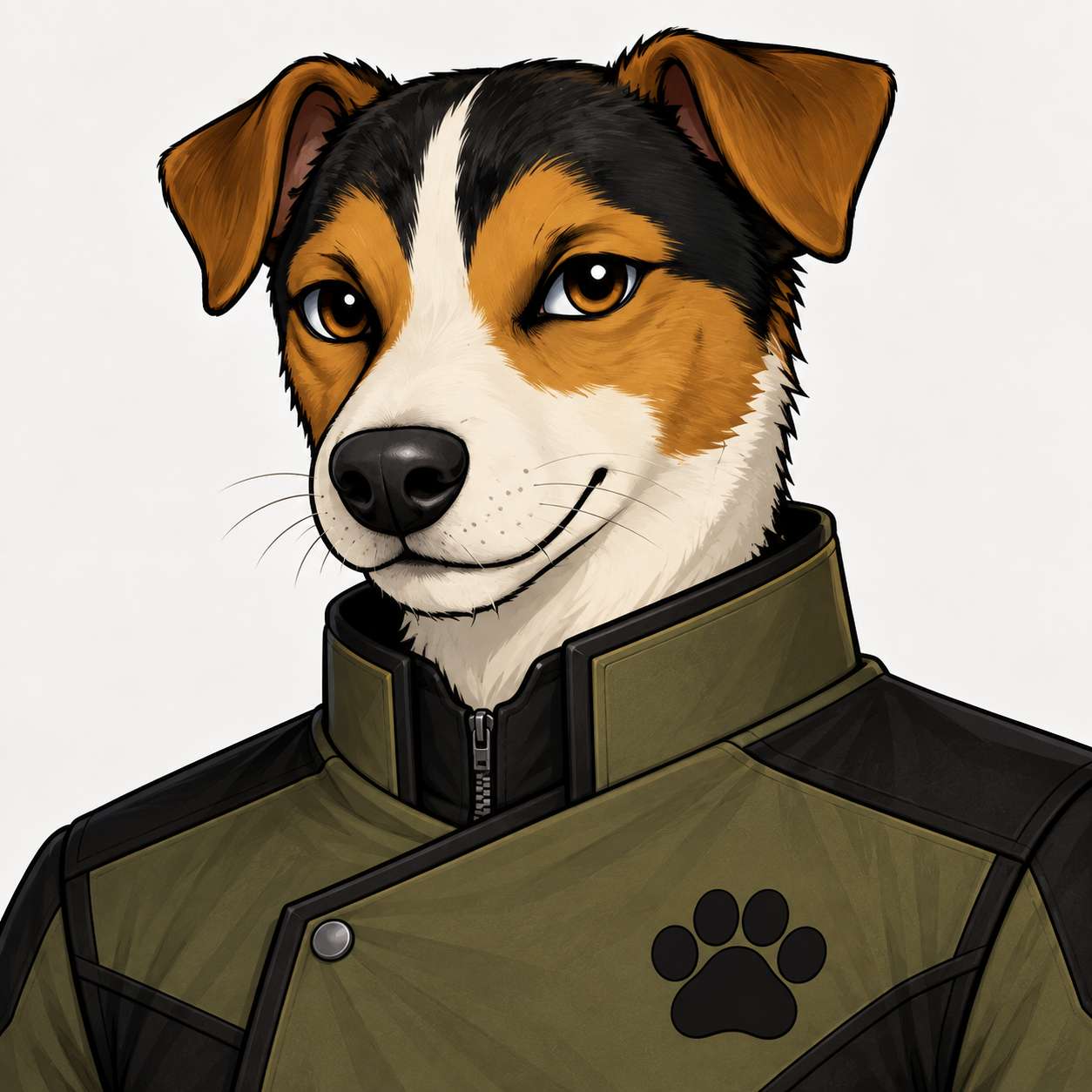
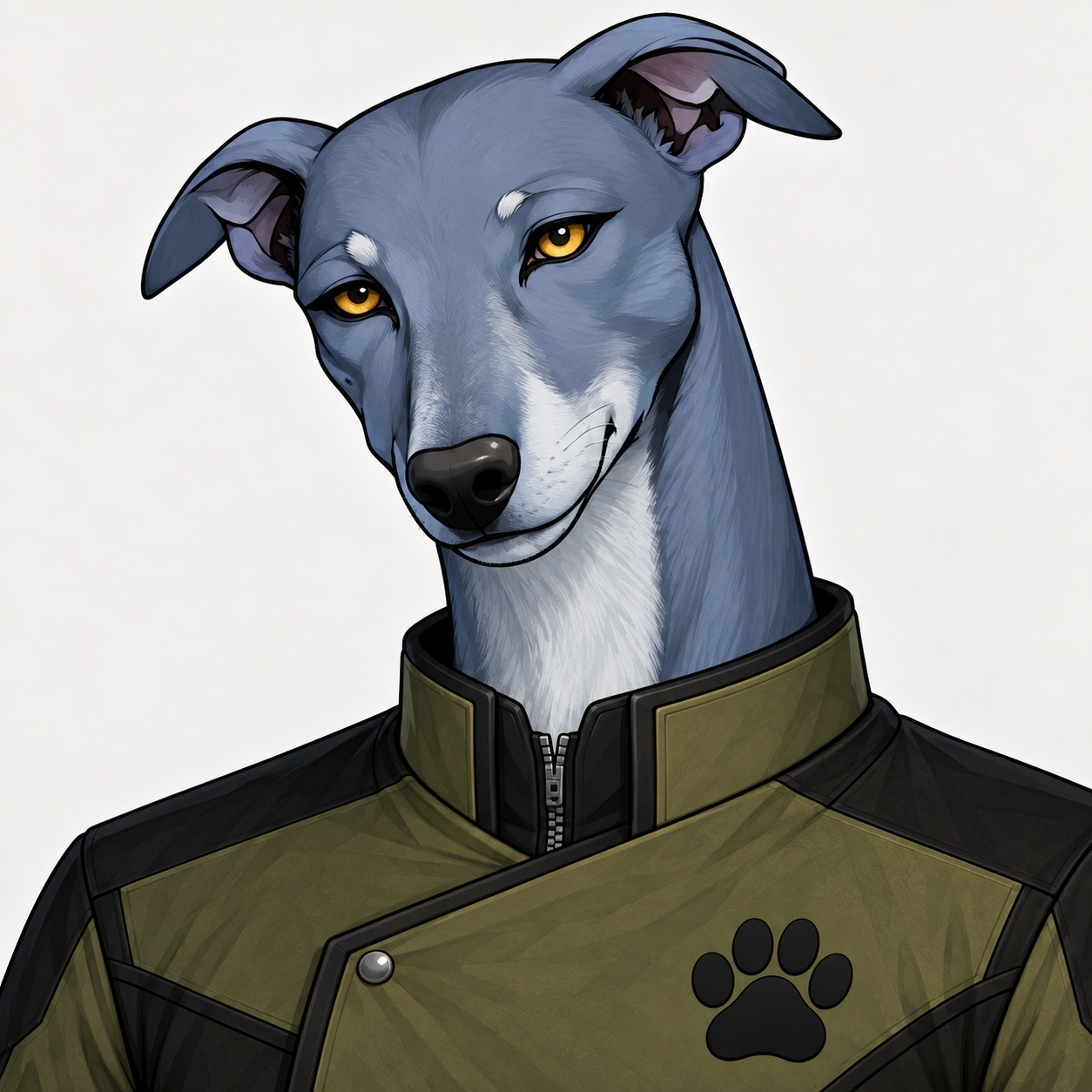
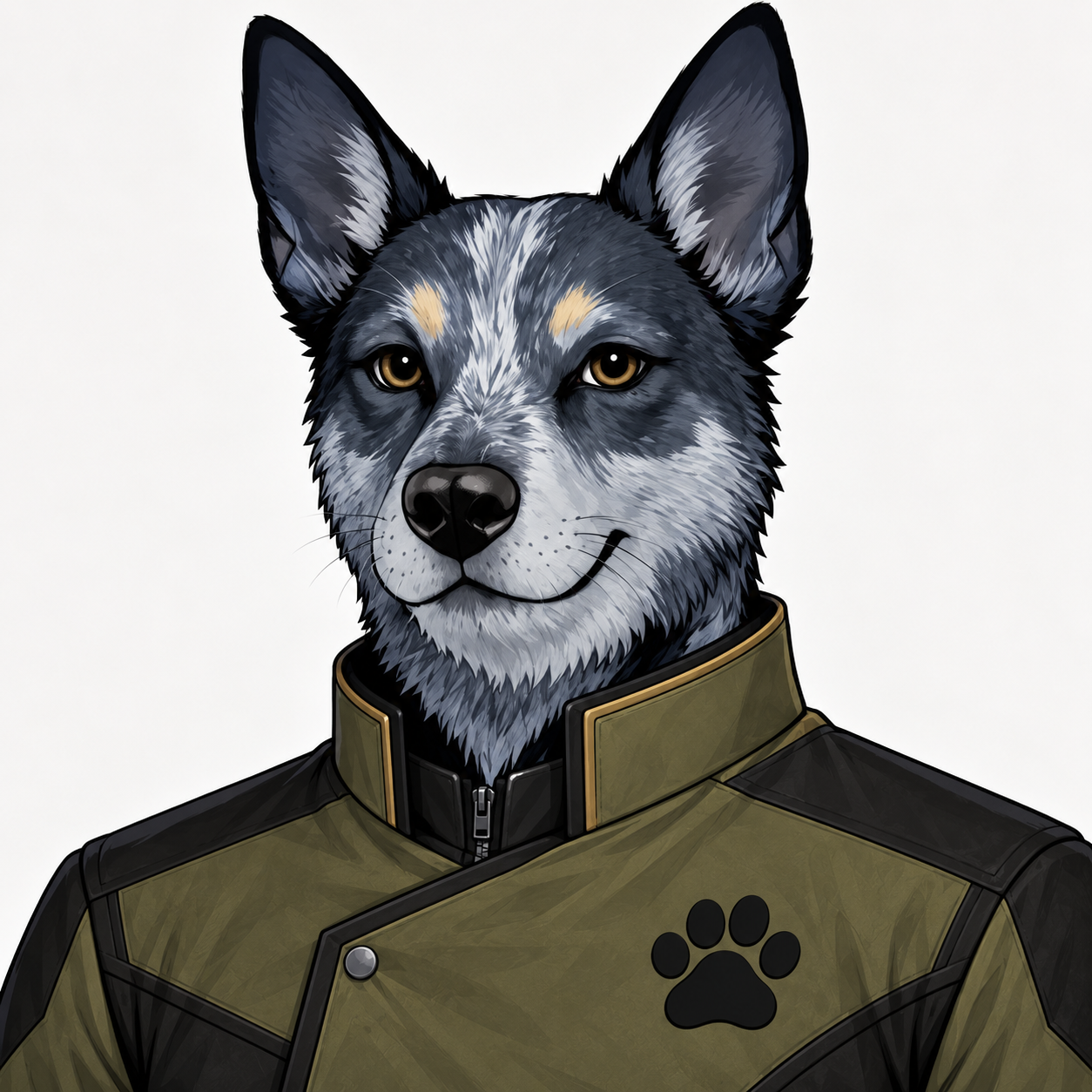
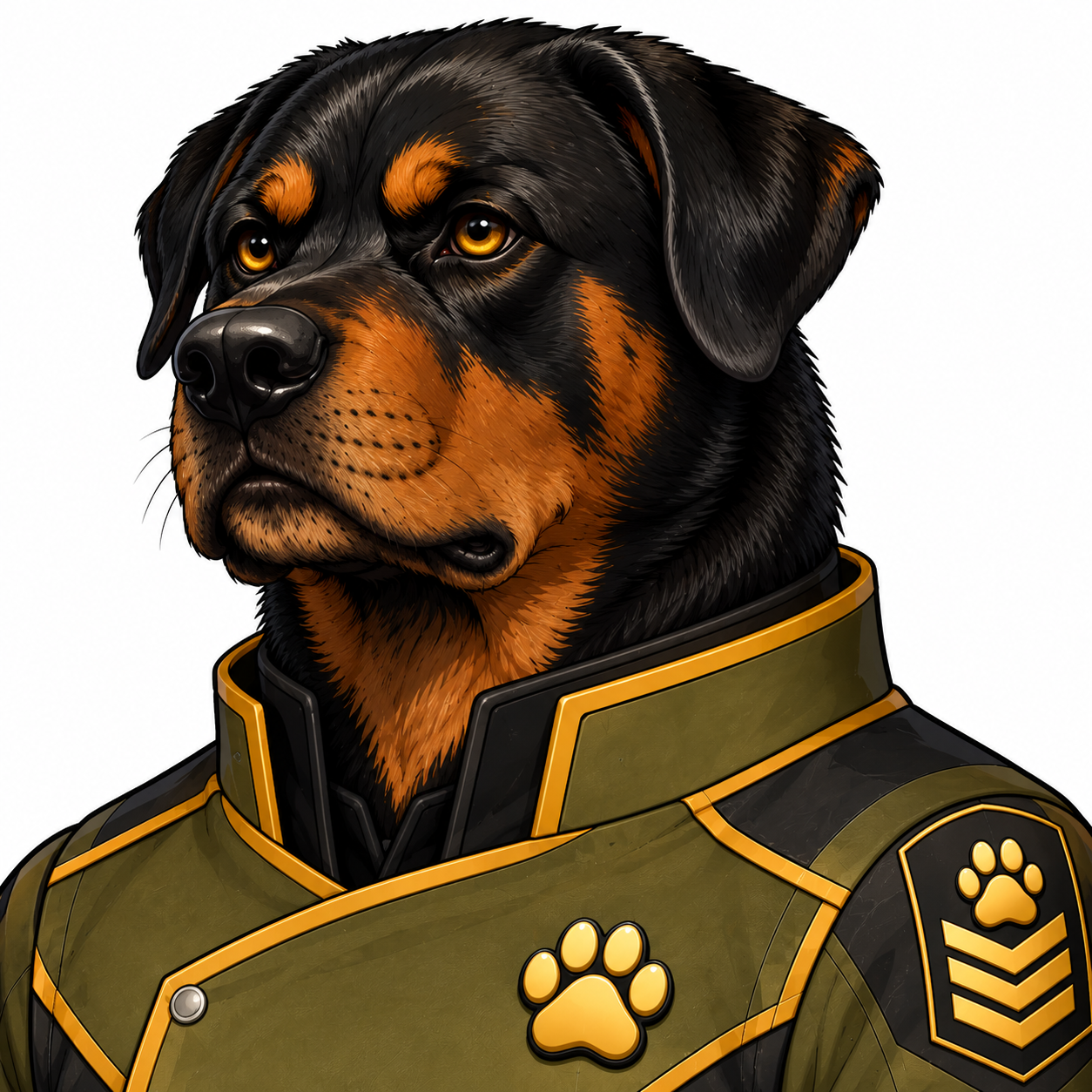
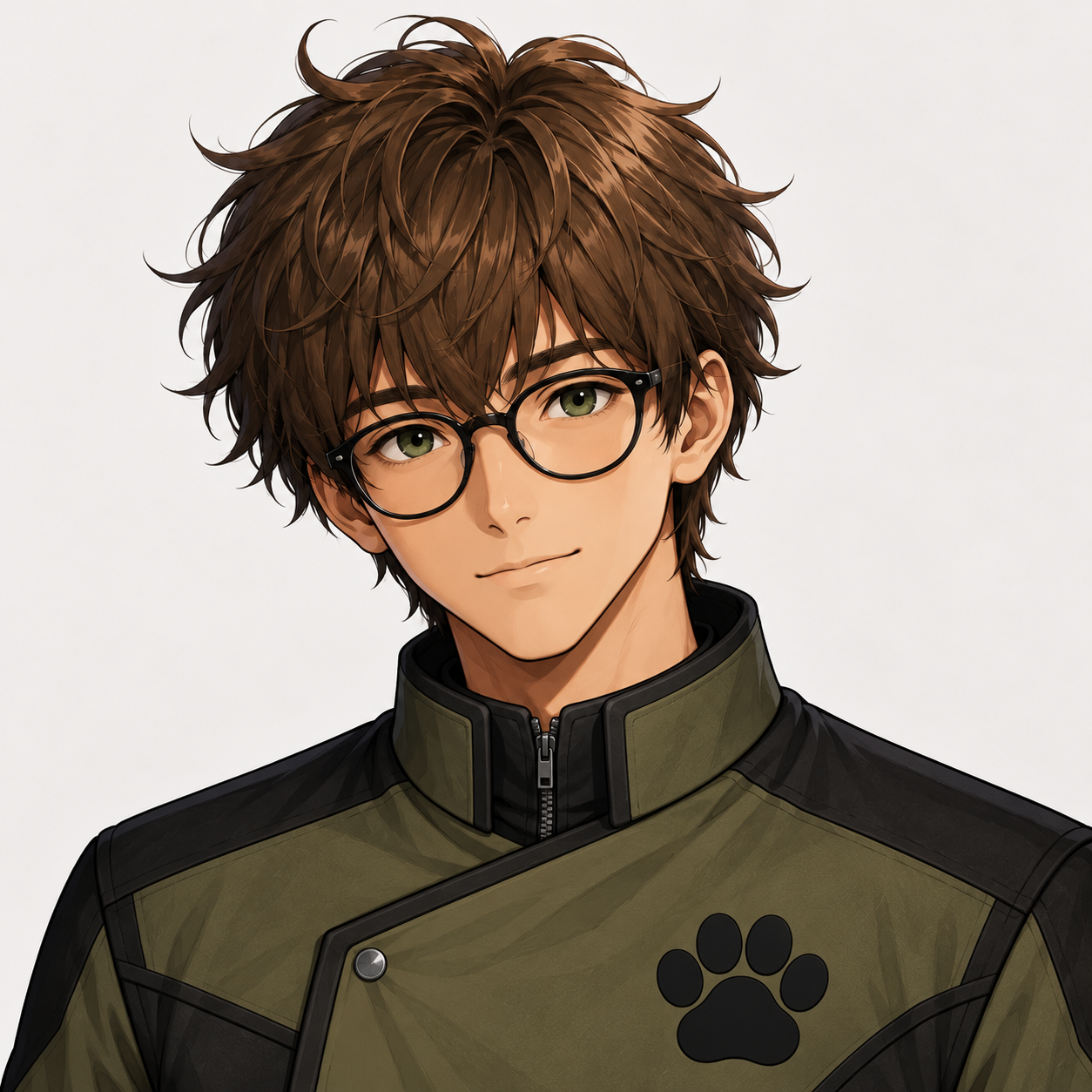
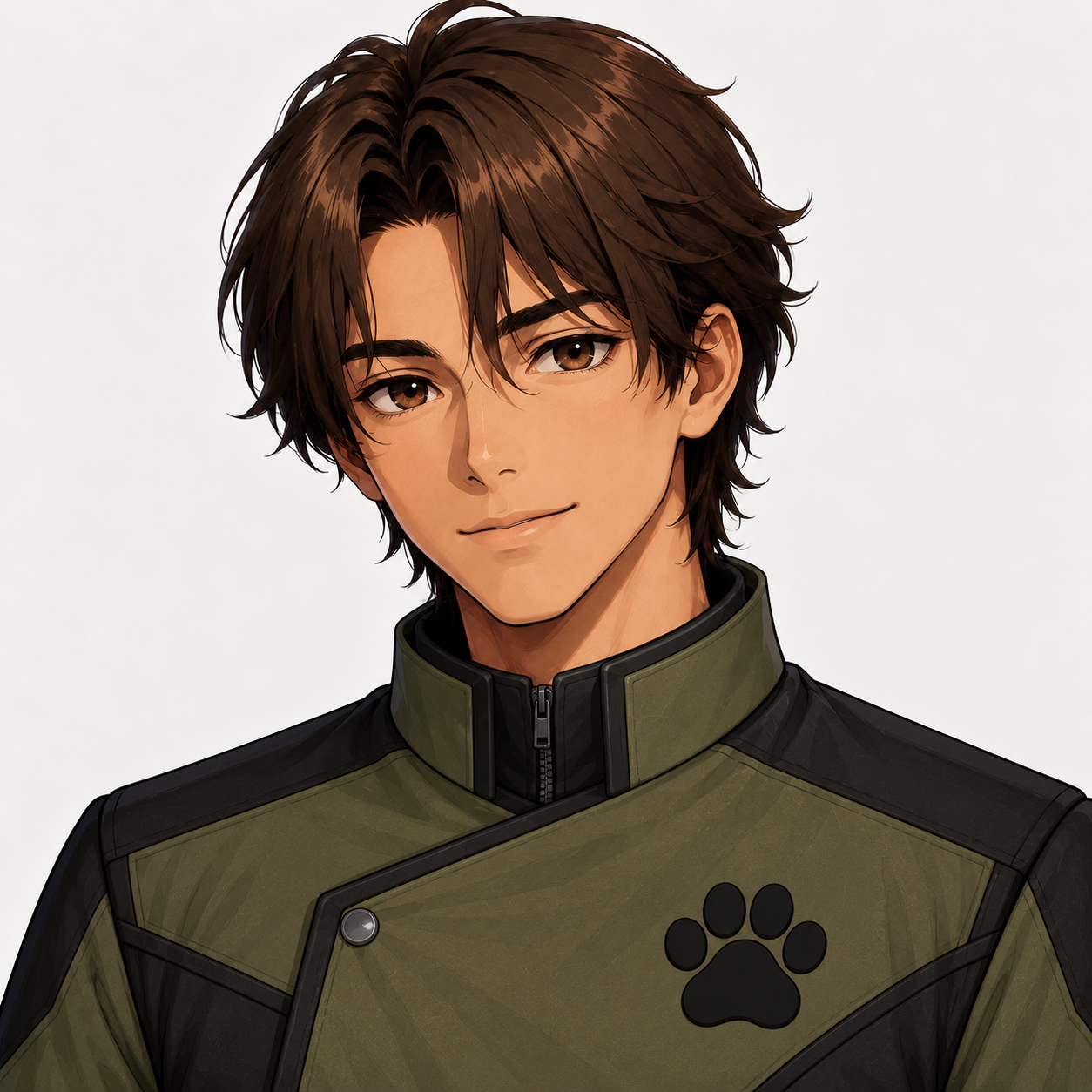
At a remote Arctic drilling station, a team of scientists and engineers make a discovery deep in the permafrost. What comes up with the drill should have stayed frozen.
Lead scientist James Jarvis sees the pattern first. A closed system. An infection with no source. He gets close to the truth, very close. One glove, one tear.
Not close enough.
The Arctic Incident is the story of a chain of lives, choices, and sacrifices that would echo across the stars for a generation.
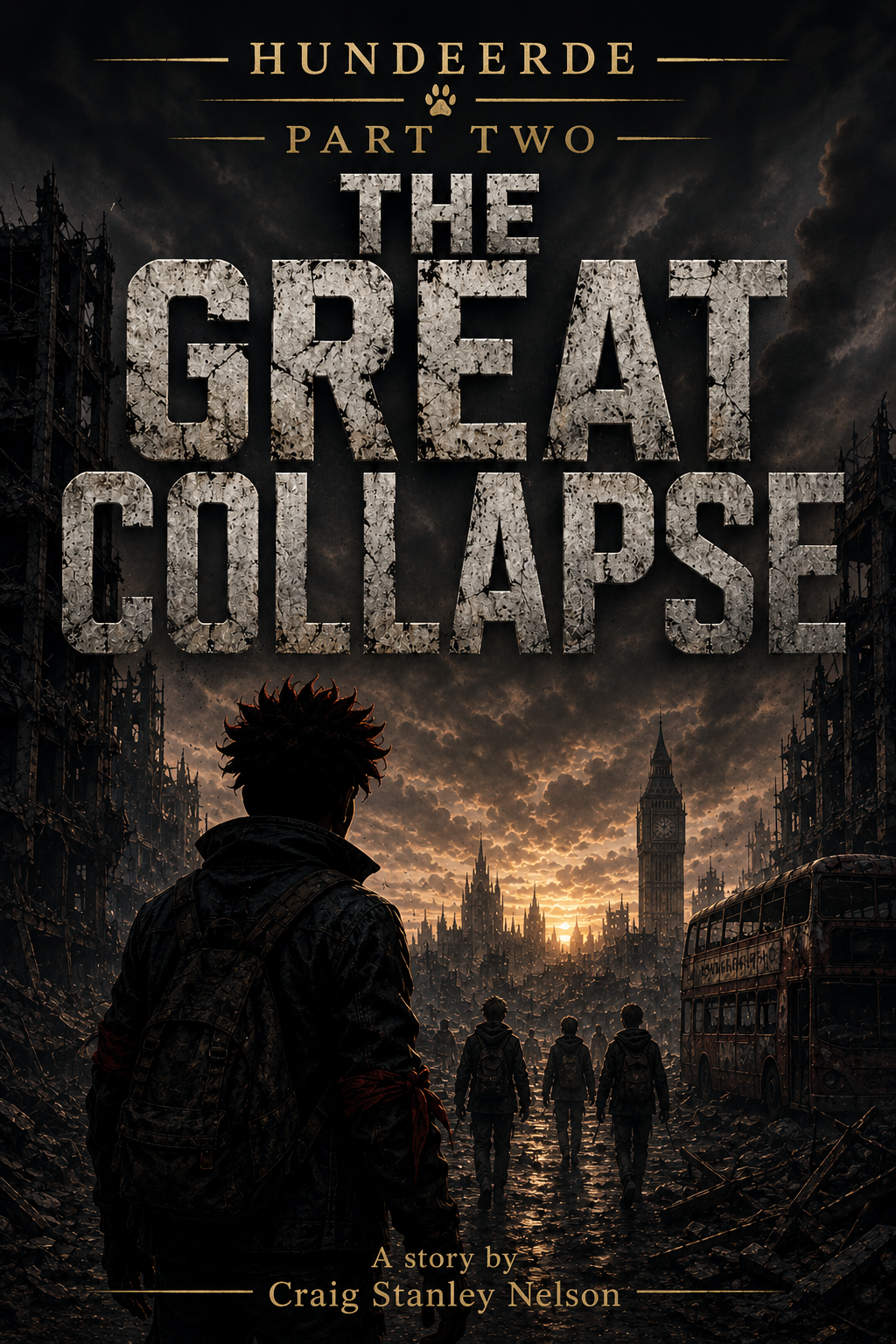
Three years after the virus, the world that remains is not the world that was.
Red is seventeen, streetwise, and harder than he has any right to be. He leads a clan of twelve kids through the ruins of what was once London; scavenging, hiding, surviving. The basement is home. The bucket is everyone’s problem. The Marauders are never far away.
The Great Collapse is the story of one night that changes everything. A flight through the dark. Nine stations walked in the underground. A boy who looked back at the wrong moment, and a choice made in a split second that only one person saw.
What happens when the person keeping everyone alive decides to run the other way?
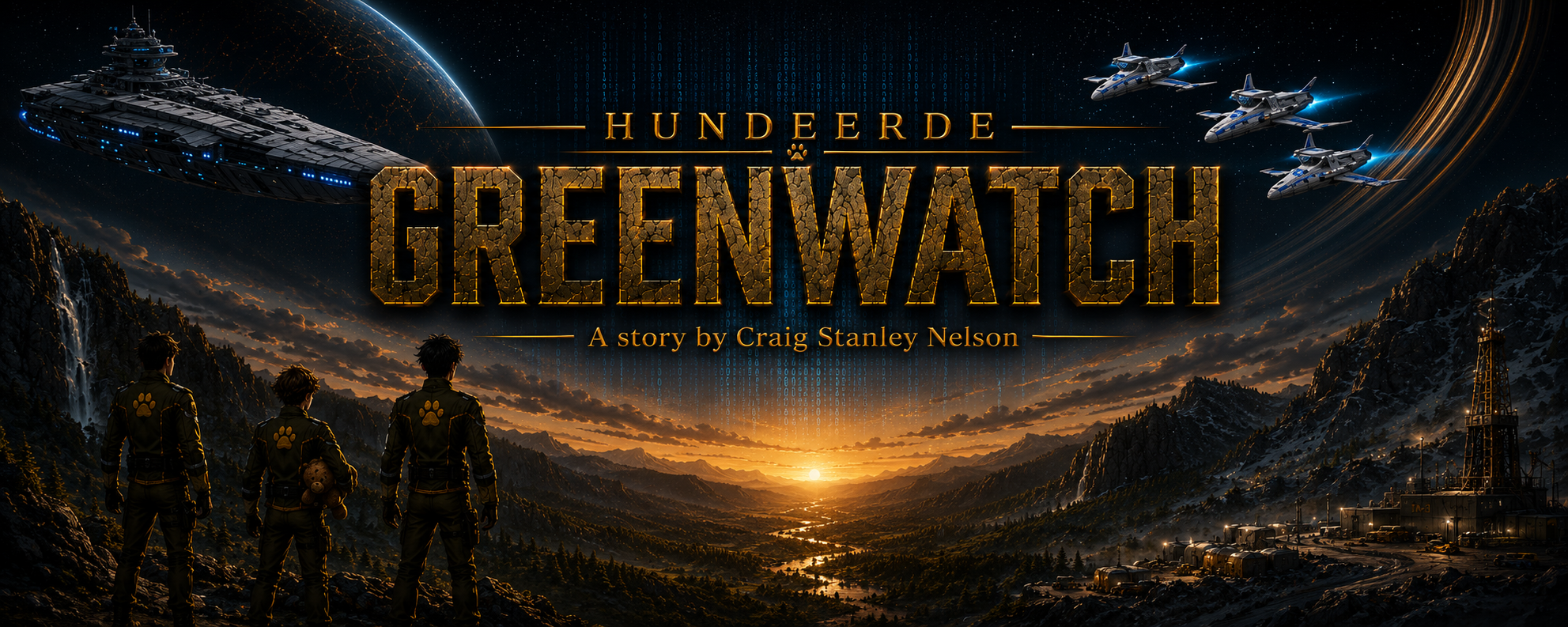
Seven years after the night that changed everything, three young men serve aboard the HSS Chasetail, one of three capital cruisers patrolling the skies above Hundeerde.
They now have call-signs and ranks. A life built from nothing on a planet with rings.
But something is out there. Probes. Non-organic. Smart and getting closer.
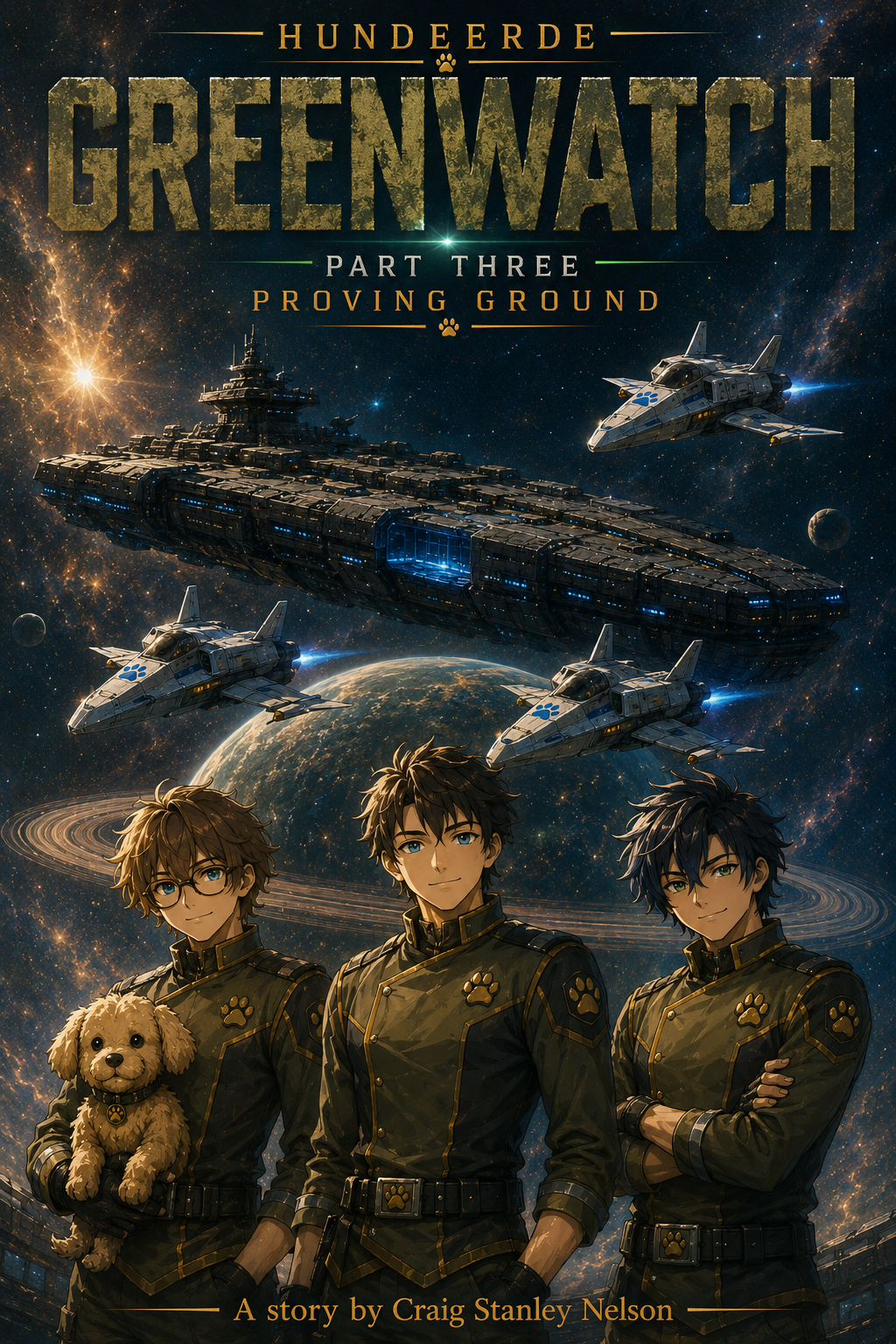
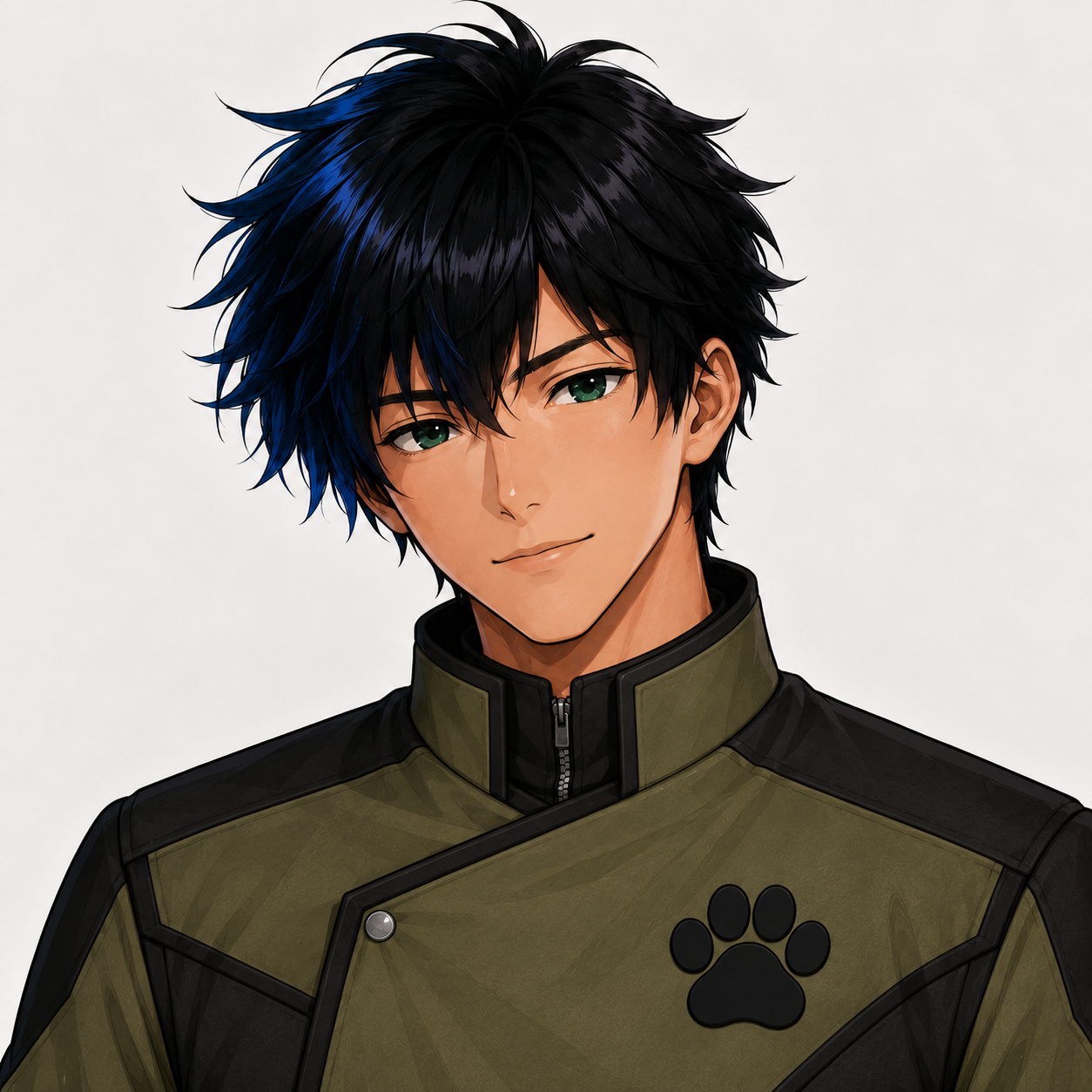
Lieutenant Sebastian Jarvis flies. Lieutenant Raven Cole watches. Lieutenant Lewis Vale, the youngest officer in Greenwatch history, notices things that don’t add up. And when Lewis notices something, it’s usually already too late to ignore it.
Greenwatch: Proving Ground is the story of what the boys from Earth became and the first sign of what’s coming next.
When twelve boys from a London basement walked down a shuttle ramp onto an alien planet they looked up at a sky with rings.
This is the story of what happened in between.
Greenwatch: Becoming follows Seb, Lewis, and Raven through seven years of growing up at Headwall Station, a working farm in the Greyfall Valley. There are chickens to feed, eggs to collect, cows to milk, and an old brass telescope in the attic that belongs to someone who isn’t there.
There is also grief. It doesn’t announce itself. It just shows up, in hands that can’t stay still, drawings in a notebook. In a stone necklace worn around a neck that conveys both memory and hope found.
Hundeerde is not Earth. But it turns out that hope doesn’t need to be from the same place as the people who need it.
New episodes of Part Four are released every Friday at 00.00 UTC.
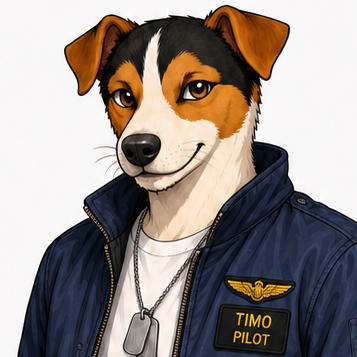
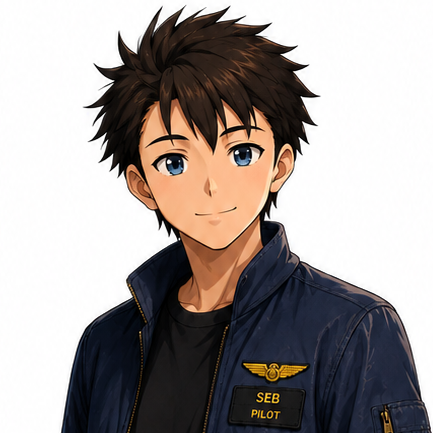
Hundeerde: Greenwatch is a graphic novel published in chapters, accompanied by illustrations. For spoken dialogue, it uses an avatar, the character’s name: dialogue, format.
Parts One, Two, and Three are complete. Part Four is ongoing. Part Five planning is well underway.
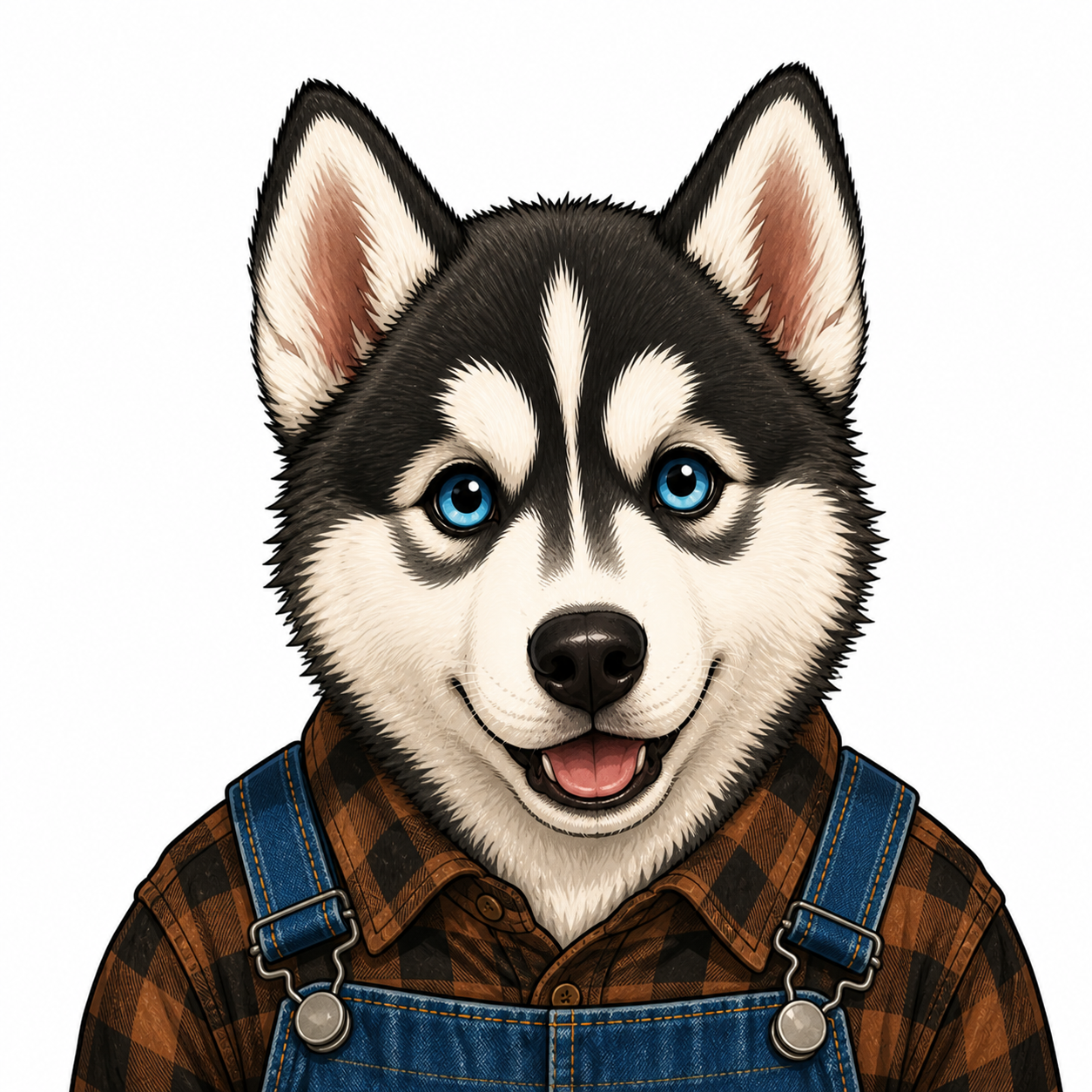
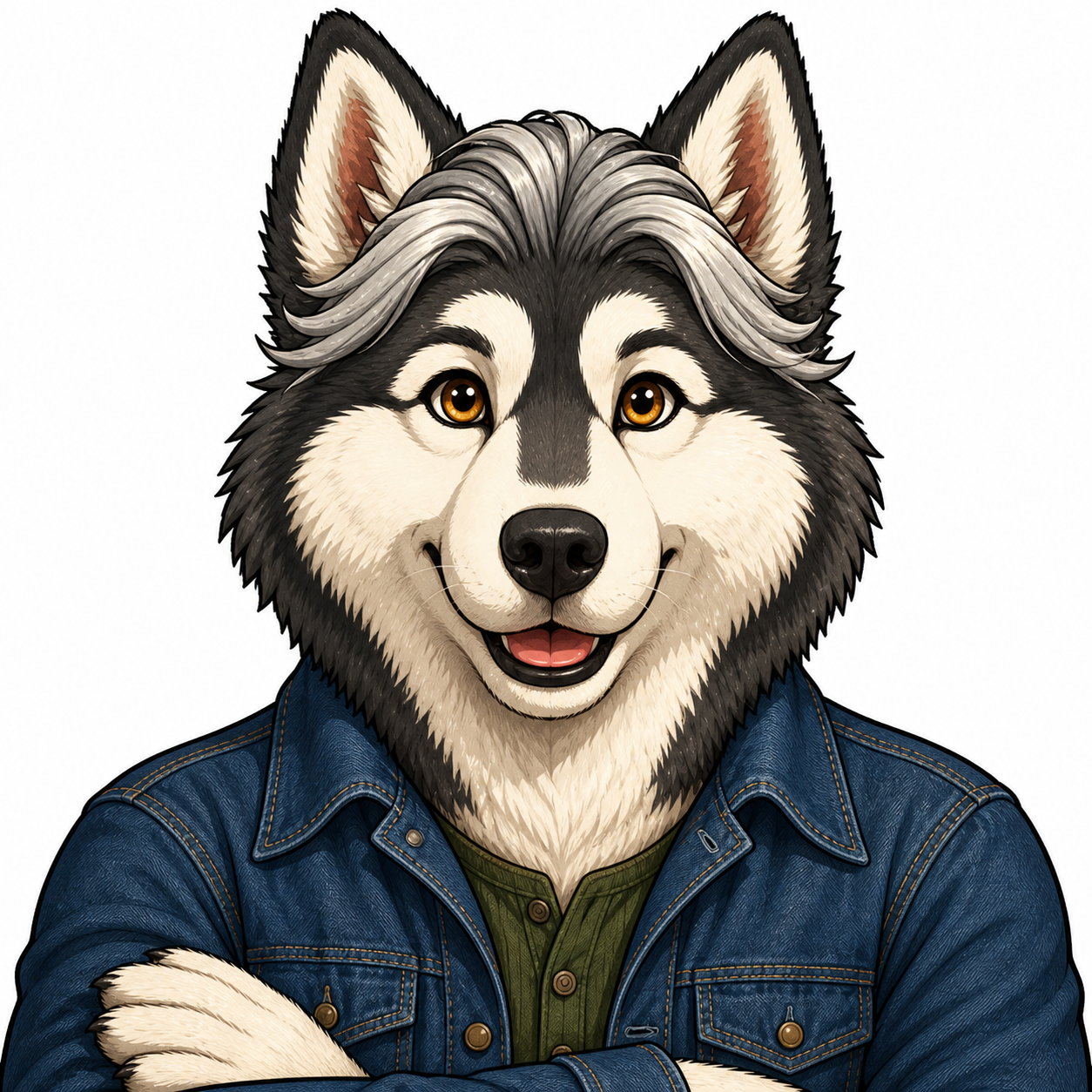
AI-Assisted Content — The author has used Claude (Anthropic) for editing and proofreading his original story. The story reflects the author’s voice, creativity, and structure; however, there may be minor incidental phrases generated by AI. Character avatar images and story illustrations are generated by ChatGPT.
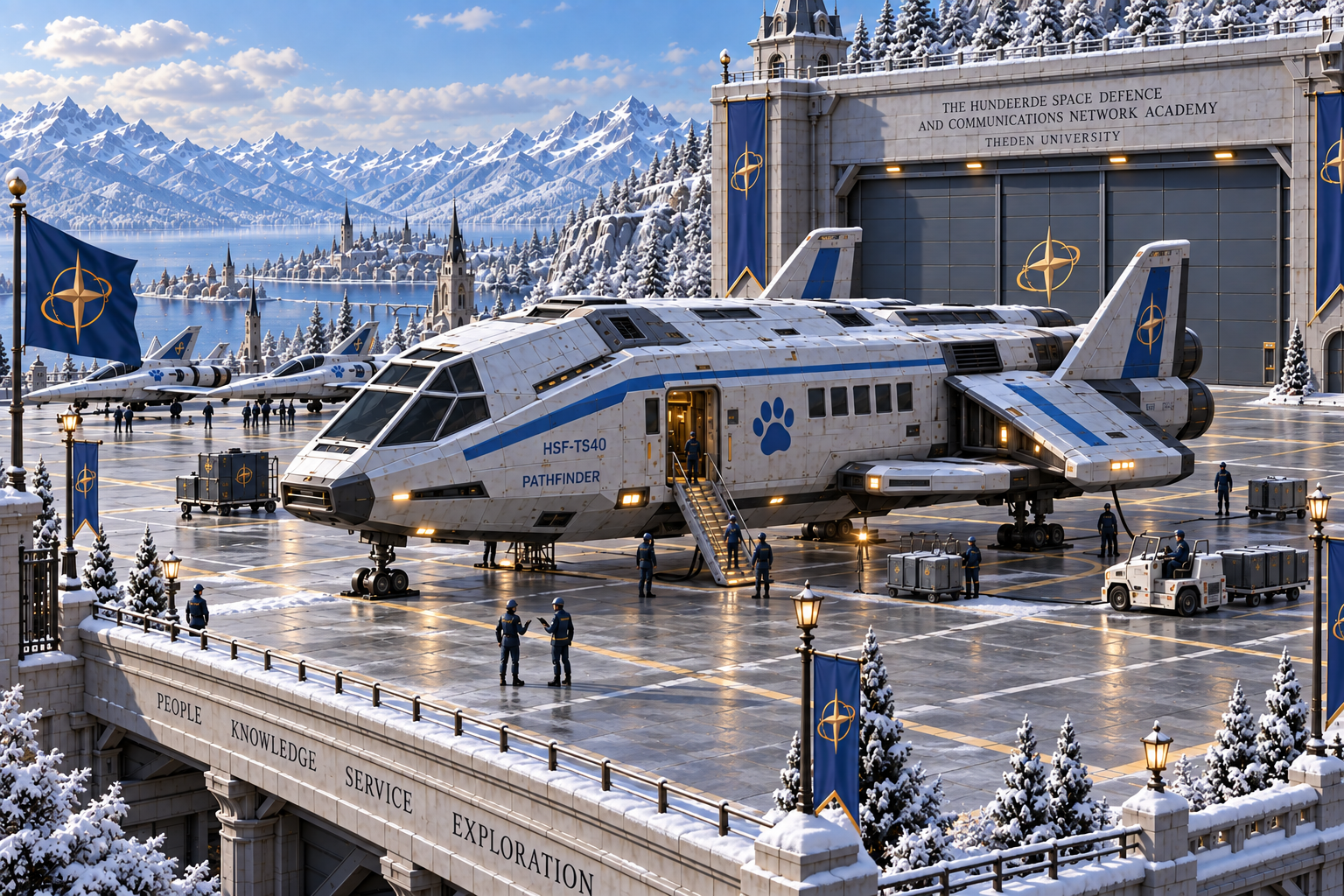
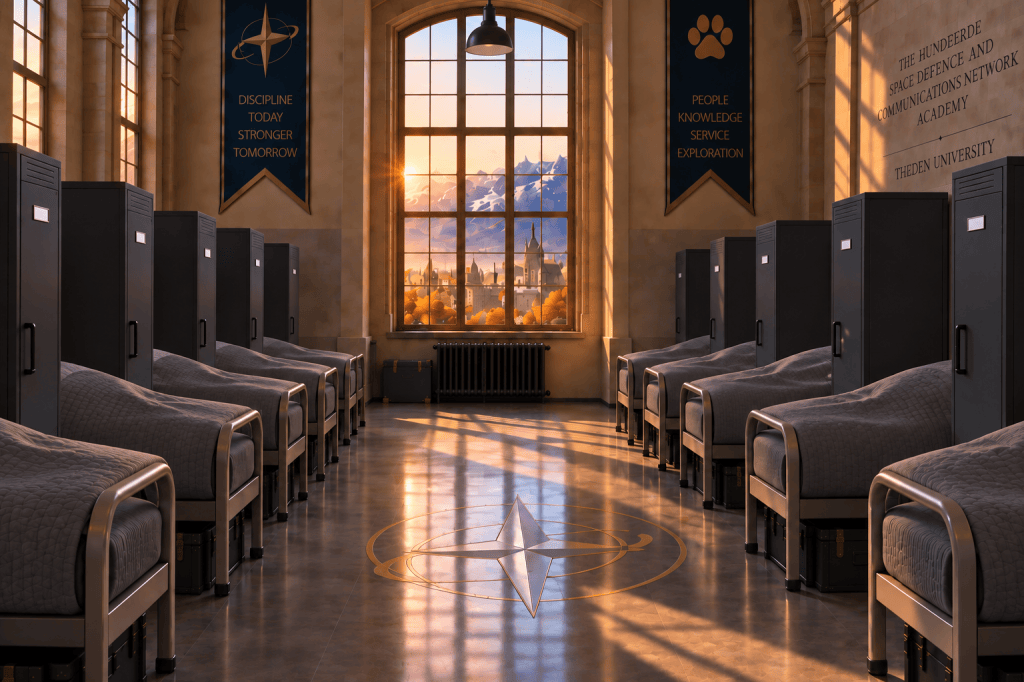
Hundeerde Space Defence and Communications Network Academy: Theden University
Winter snow cloaked the mountains and trees surrounding Theden and the Academy. Early Monday morning the thirty cadets of Blue Flight were formed up one last time on the flight apron, in three ranks of ten, cargo bags beside them, ready to board the HSF Pathfinder. The next phase of their training was about to begin, orbital training. Timo had been practically fizzing with excitement all weekend.
Timo: We finally get to fly! In space!
Hans: The junior phase of training will be in simulators. We won’t actually get to fly for real until the intermediate phase, in seven months.
Timo: Seven months! We’ve already done three months pounding the flight apron and making our beds! I need to fly — it’s my destiny!
SWACK!
Toby: Quit it with the ‘destiny’ crap!
This is not one of those kinds of stories!
Flight Sergeant Krieger looked over his cadets one last time. They were ready. He snapped his heels together, and brought himself up to his full height, arms by his side, fully at attention. He breathed in once.
Krieger: Blue Flight! A-tten—tion!
The entire Blue Flight snapped to attention as one.
Krieger: Blue Flight! Over the last twelve weeks, you have learned and achieved much.
You are ready for the next phase of your training. Well done all of you!
I now dismiss you one last time.
Blue Flight! Board the shuttle. Diss—missed!
With that last order from Krieger, Blue Flight turned, picked up their bags and headed to the waiting steps of the Pathfinder.
Pathfinder — Departure
In an orderly file, the cadets placed their bags on a waiting dolly, stacking them up, before they climbed the steps and boarded the waiting Pathfinder. Two crew members were waiting for them and directed them to their seats.
Raven: Hey, Tick Tock, get a move on would ya. Times-a-wasting. Park that blue fluffy butt of yours!
Toby: Patience, Rae — good things come to those who wait. Bad smells come to those who don’t.
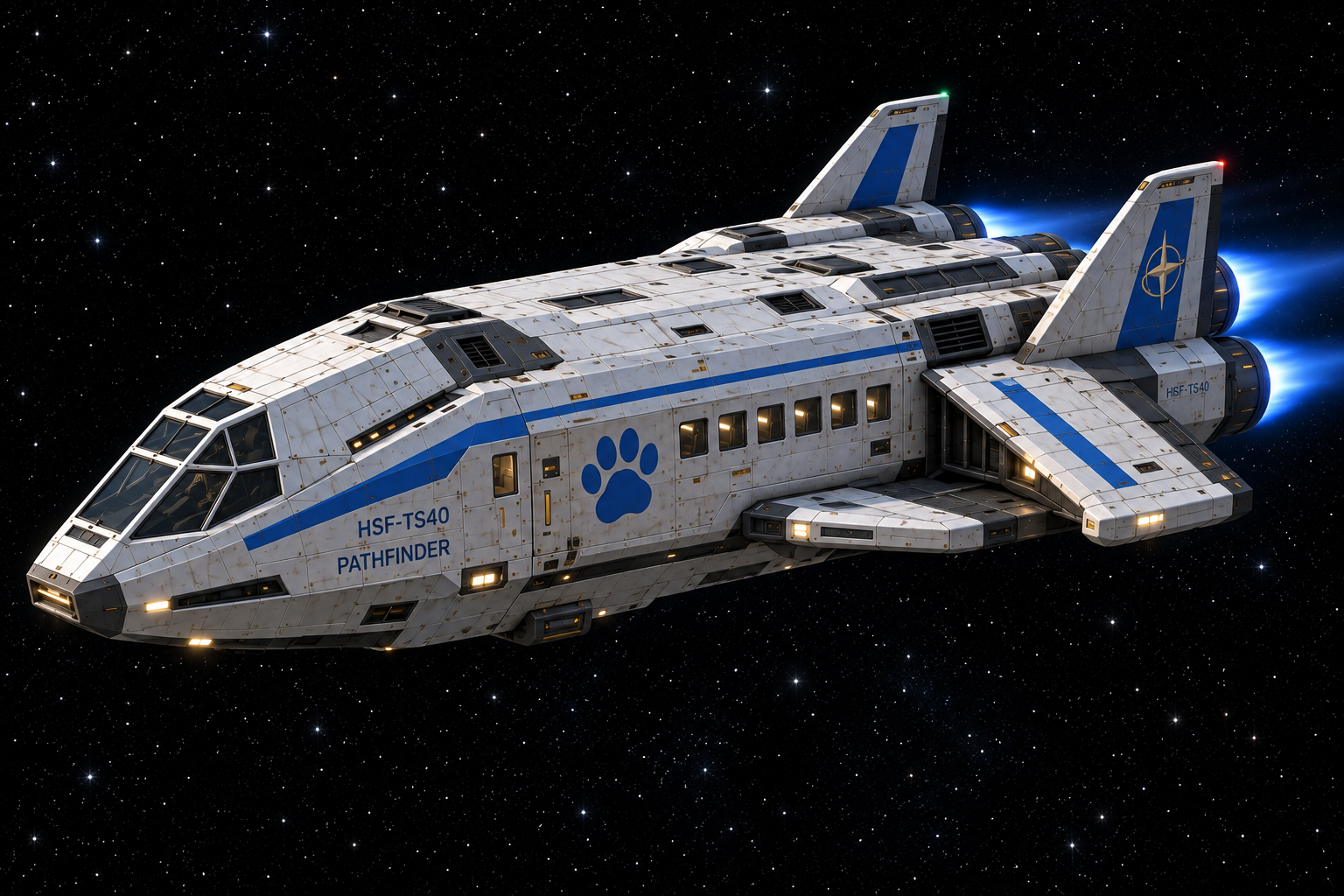
Once all the passengers were boarded and settled, bags loaded, steps retracted, and final crew checks made, the Pathfinder was ready to leave. The liftoff from the apron was almost imperceptible, a slight increase in the ambient hum from the engines and suddenly the view from the windows changed, with Theden retreating slowly below them. As the Pathfinder climbed higher the darker blue of the sky gave way, slowly changing to indigo, where some of the first stars could already be seen.
For Timo, Hans, and Toby, this was their first time to experience the wonder of leaving the surface of a planet and entering space itself.
Timo: Look at that sky! It’s true indigo now.
Hans: Get ready for an increase in thrust, guys!
Then it came, a noticeable increase in thrust and engine noise, as the ship poured on the power, enabling it to escape the gravitational pull of the planet and punch its way on up through the upper atmosphere and into true orbit. A few minutes later the indigo sky gave way to the inky blackness of space, the full array of stars now visible.
Toby: Wow. That was quite some kick in the tushy!
For Seb, Raven, Lewis, and Scott, this was not the first time they’d watched a sky fade from blue to black — five years ago it had been Earth falling away beneath them, marking the start of their journey to a completely new and unknown world. This time the unknown wasn’t a planet. It was what still lay ahead of them, not only with their training, but with what ultimately lay beyond. For now though, they kept their thoughts and feelings private as the indigo sky faded to black.
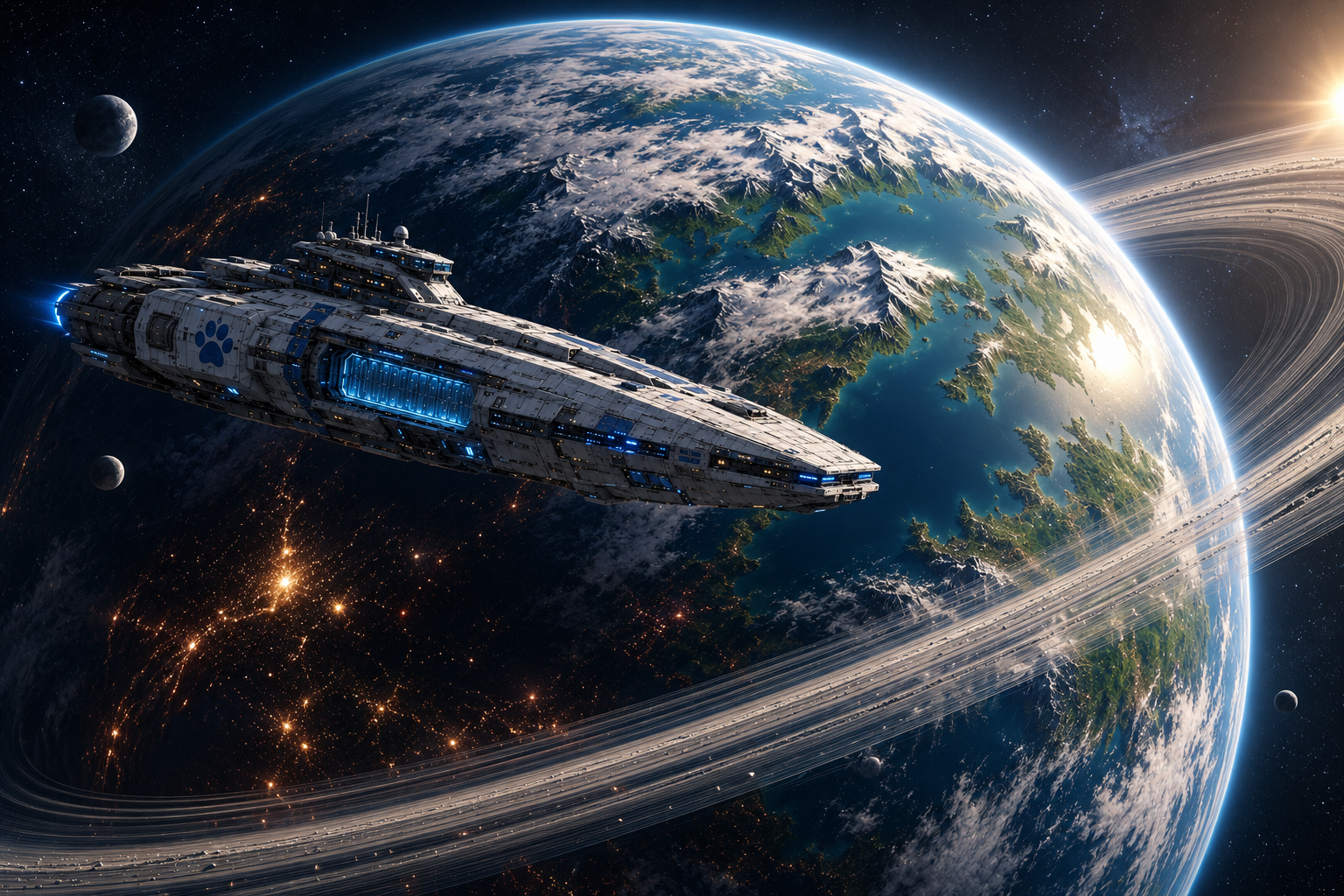
After the Pathfinder fired its thrusters and accelerated to escape velocity, it settled into its first fast orbit of the planet. Its residual momentum allowed it to coast and climb higher, outward and upward, passing Skerry, Hundeerde’s smallest rocky moon, which orbited just inside the planet’s rings. Once the Pathfinder reached the first inner layer of rings, it fired its thrusters again to climb through the concentric ring layers to settle into a higher slower orbit. Once fully clear of the outermost rings, the Pathfinder gradually matched the orbit of the Wayfarer sitting high above the planet.
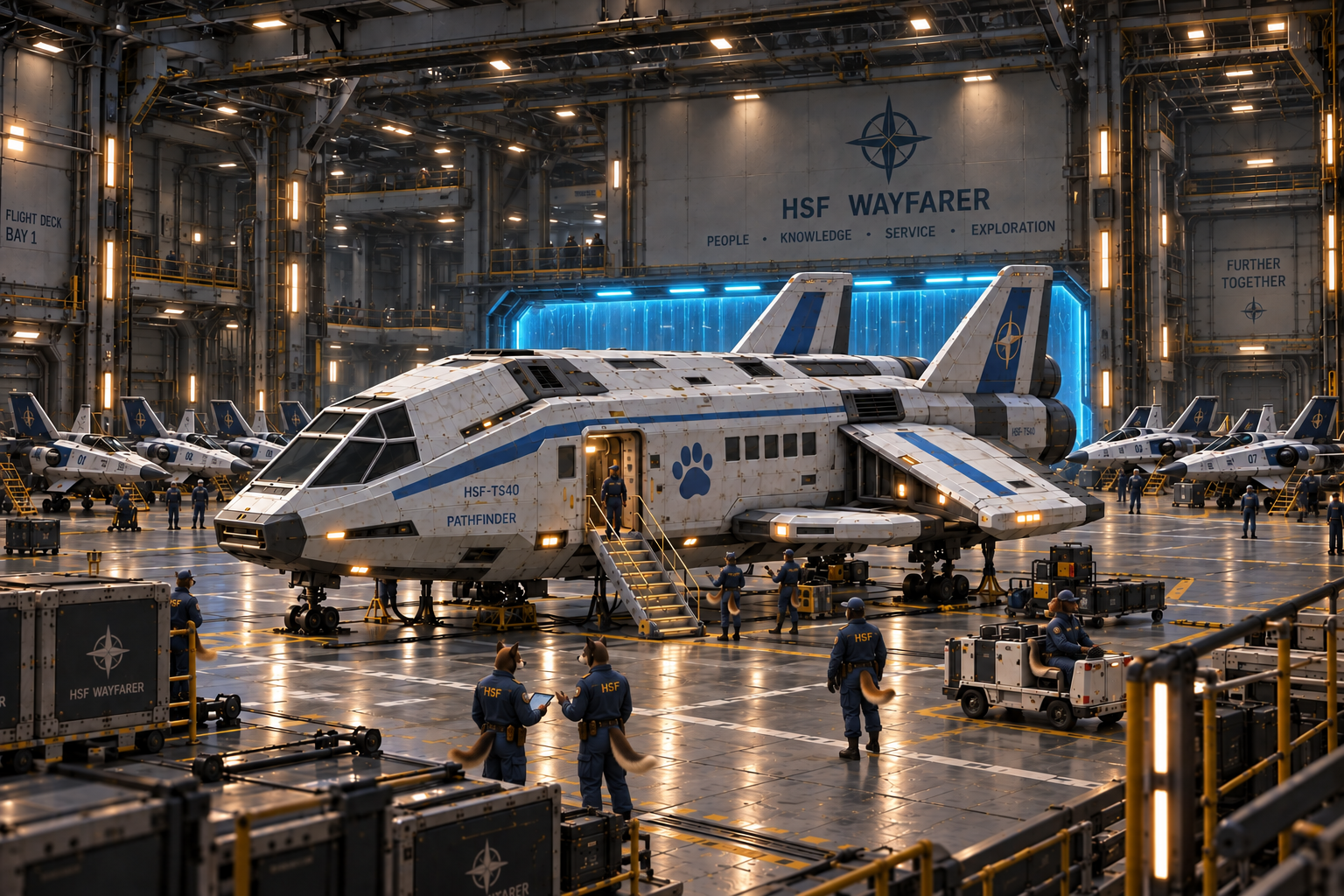
Through the windows they caught the first sight of the Wayfarer, a 150-metre ship, its cyan-blue portal curtain open, ready to swallow the Pathfinder whole as it came in to dock in the Wayfarer’s cavernous internal flight deck.
Flight Deck — Arrival
Once the hatch was open and the steps were down, the cadets were able to step out into the flight deck hangar of the Wayfarer for the first time. Their first impressions were of a truly cavernous space, large enough to comfortably take the Pathfinder and several rows of additional Houndswifts. Deck crew scurried about, each with their own job and purpose; the flight deck was no place to be if there wasn’t a requirement to be there.
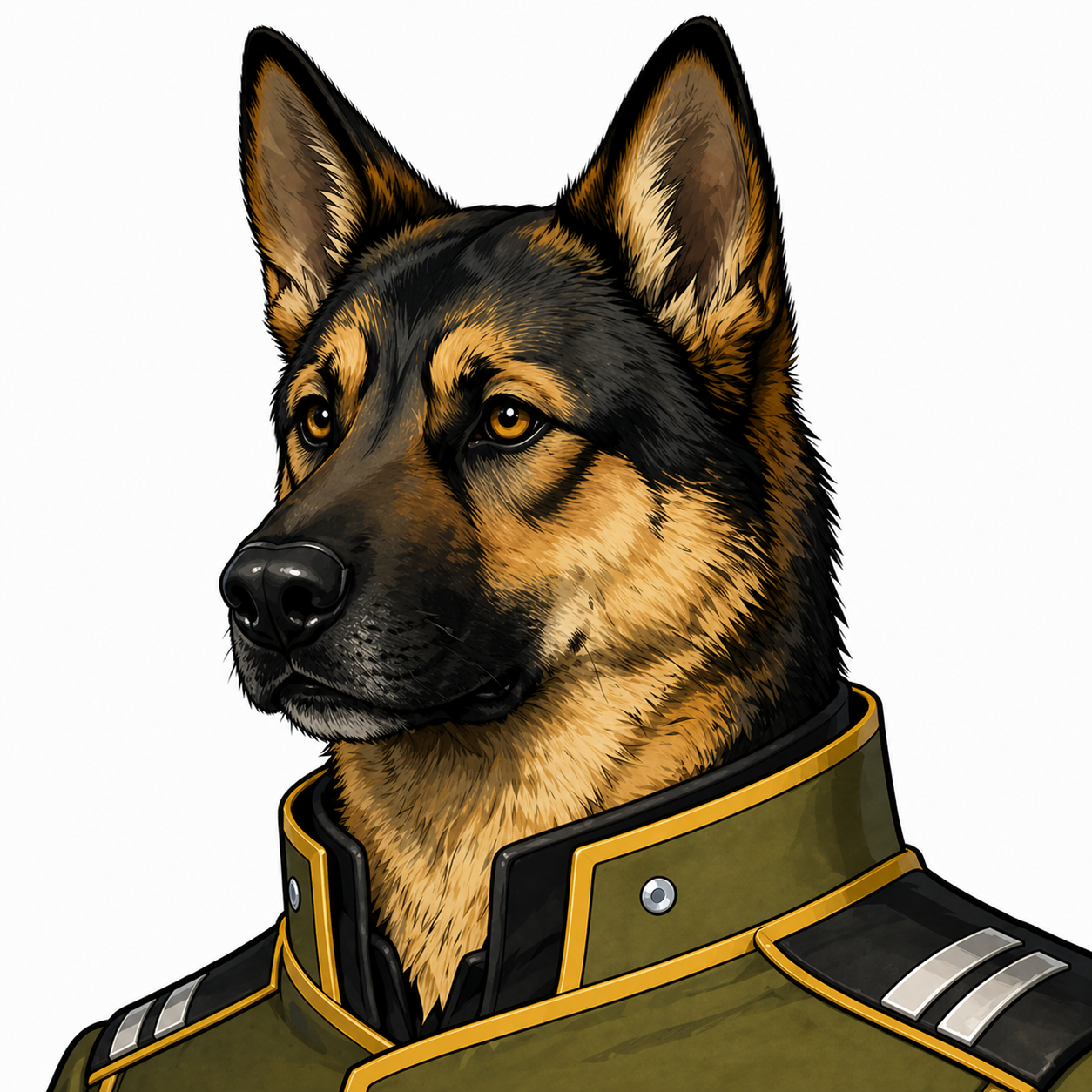
As the bags were being unloaded onto a dolly an alert German Shepherd crossed the deck with an easy, unhurried stride. He wore the rank of Lieutenant Commander and the first group of cadets he came to, snapped to attention and saluted him smartly. He returned the salute and spoke evenly and clearly.
Klaus: At ease, cadets.
I am Lieutenant Commander Klaus Adler and I will be the commanding officer of your flight. You may call me Lieutenant Commander or Skipper.
Blue Flight — collect your bags.
It took a few minutes to sort out the pile of thirty bags, but soon each cadet had their own in their hand or paw.
Klaus: Everyone got their bag?
Once he had received the confirmation of a few nods and ‘yes, Sir’s’ he continued.
Very well. Blue Flight, follow me.
Wayfarer — Orientation
The cadets followed Lieutenant Commander Adler through a maze of corridors, up several flights of stairs, and then along even more corridors. It was clear it would take some time to learn their way around the ship and to be able to find the way to anywhere.
On the way, Klaus explained that the ship held three full flights of cadets at any one time, junior, intermediate and senior. Ninety cadets in total. Each training phase would rotate every seven months. The ship had an additional crew of around two hundred, making the total crew on board approximately three hundred.
It was clear to the cadets that the Wayfarer was not the newest ship of the fleet. While immaculately clean, signs of wear could be seen, with plenty of worn surfaces. The ship very much had an industrial feel, with function prioritised over aesthetics.
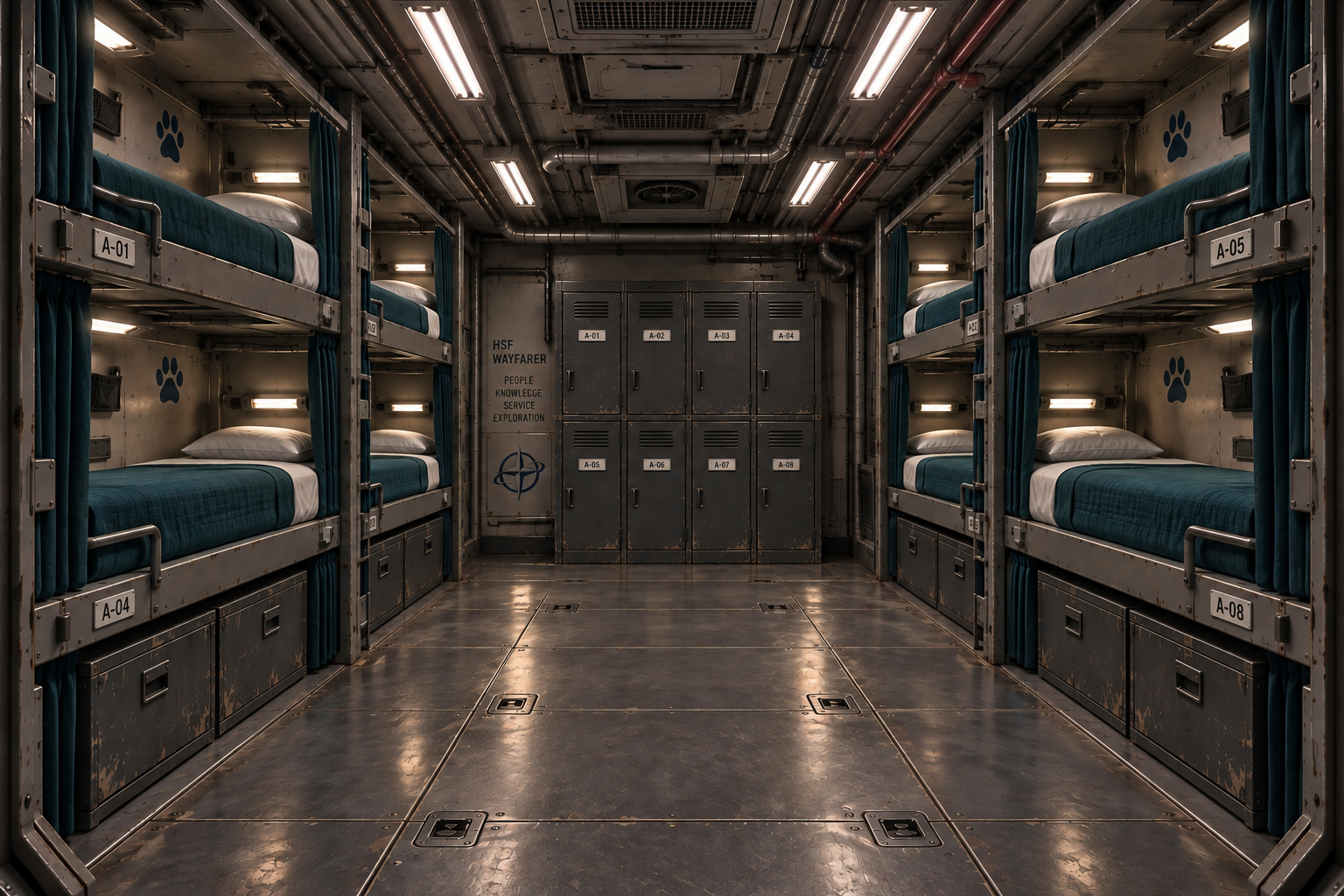
The group arrived at the cadet accommodation deck. Each dormitory held eight bunks, with two sets of four either side. Beneath the bottom bunk were two deep metal drawers, one for each cadet. At one end of the room there were two stacked rows of four vertical lockers, eight in total for additional storage. The industrial feel continued with a metallic deck and exposed piping running along the walls and across the overhead.
What they did notice however, in a clear contrast to their bare mattress arrival at the academy, was that the bunks were already made up for them, with the usual Network issue: teal-green blankets, sheets and pillows.
Toby: Guys! No more bedrolls… and… we get a privacy curtain!
Timo: I hope the bunks don’t shake.
Simulation
For the first time since starting their Academy training, the pilot cadets were truly starting to feel like Network pilots even if they had not actually left the flight deck yet. Each now had several hours of simulator sessions logged, enabling them to master the basic flight operations of the Houndswift.
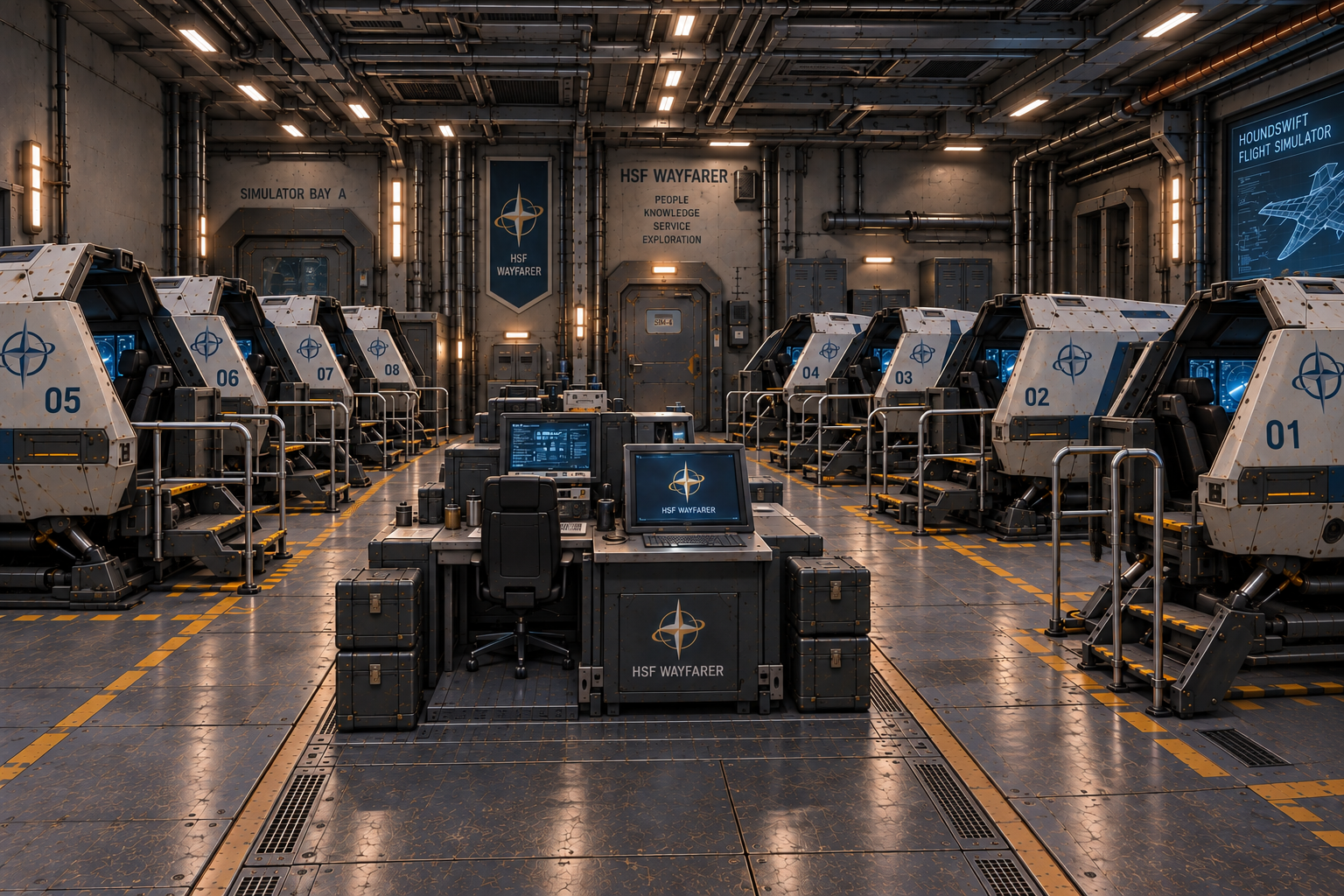
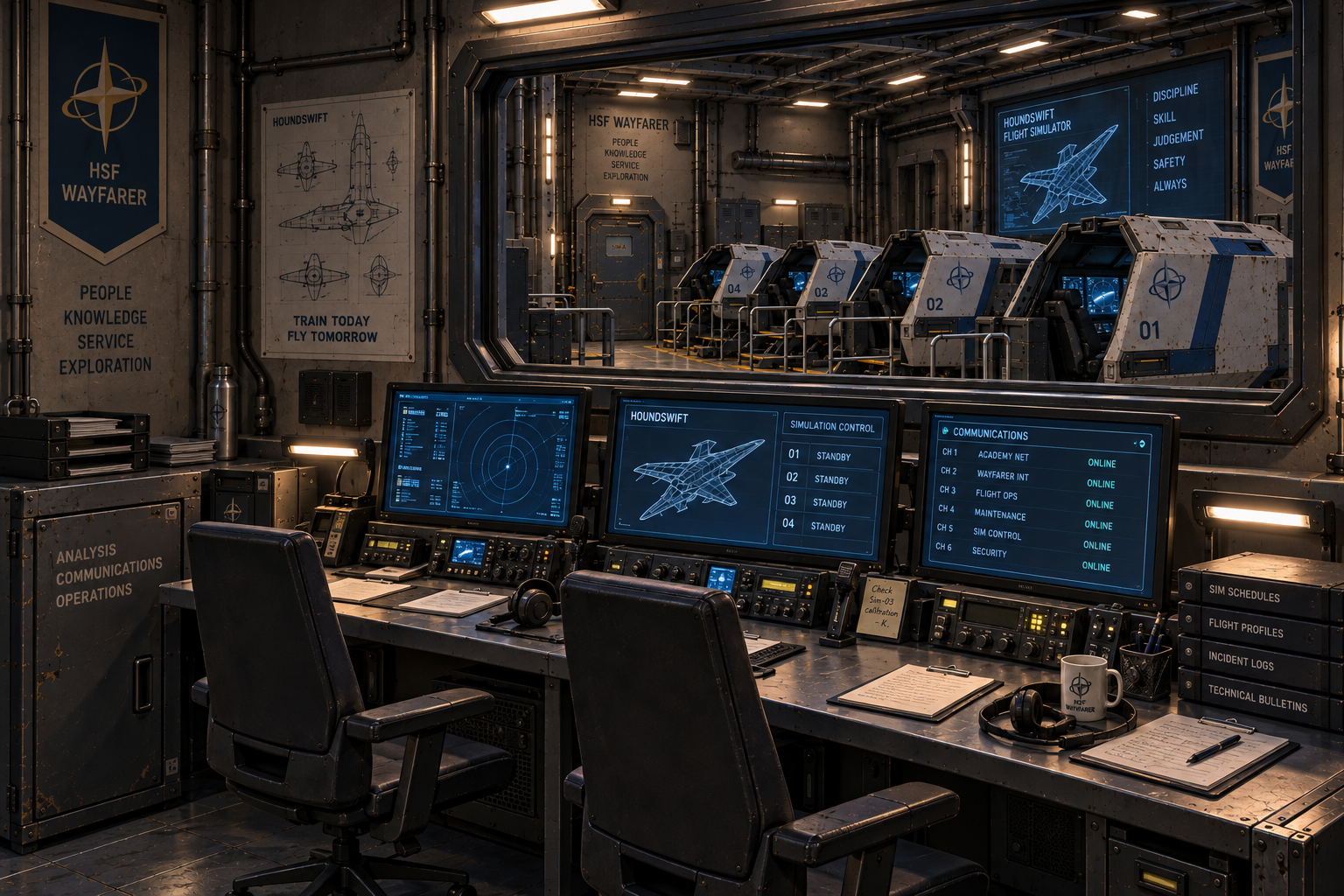
Each pilot sat in their own simulator pod, which, as long as they didn’t look behind themselves, felt incredibly realistic. The simulators were equipped with the exact same flight deck controls and instrument panel that they would find in a real Houndswift. At the master control console in the middle of the simulator bay, Lieutenant Commander Klaus Adler sat overseeing today’s training session.
Klaus: All cadets, listen up.
For this training session you will be known as Red-Wing. My callsign is Keel-One. Your individual callsigns will be Red followed by your pod number.
Red-Wing, number off and report in!
Seb: Keel-One—Red-One. Standing by.
Raven: Keel-One—Red-Two. Standing by.
Timo: Keel-One—Red-Three. I-am-stan-ding-by!
Hans: Keel-One this is Red-Four. Standing by.
Toby: Keel-One—Red-Five. I’m standing by.
The remaining simulator pods, Red-Six, Red-Seven, and Red-Eight, were occupied by other cadets from Blue Flight and also reported in as ready.
In addition to the eight pilots, the two communications cadets were waiting ready to join the training exercise in the simulator control room.
Lewis: Keel-One this is Comms-One. Standing by.
Scott: Keel-One—Comms-Two. Standing by.
Klaus: Red-Wing—Keel-One.
Red-Wing pilots, start your engines.
Red-Comms, stand by for departure vectoring.
Proceed with simulation.
Simulated or not, Timo had been looking forward to this moment for months, this being the first real flight mission that wasn’t just a set training circuit around the planet. Today, they were going to Vandra, the largest and furthest out of Hundeerde’s three moons. He wiggled his butt firmly back in his seat and flipped the necessary switches. A full display of indicator lights appeared across his instrument panel, and he felt and heard the faint hum of the plasma lattice engines come to life. His whiskers quivered in anticipation.
Klaus: Red-Comms, commence departure vectoring.
Lewis: Red-Flight—Comms-One. Stand by for group one departure vectoring.
Red-One, you are cleared for departure, port-side curtain, you lead. Red-Two, you are cleared for departure, follow Red-One. Red-Three, you are cleared for departure, follow Red-Two. Red-Four, you are cleared for departure, follow Red-Three.
A round of acknowledgements came from each pilot as they gently rose from the flight deck and cleared, sliding through the port-side curtain, out into orbit. Once the first four craft were clear, it was then Scott’s turn to depart the remaining four pilots in their simulated Houndswifts.
Scott: Red-Five—Comms-Two. You’re cleared for departure, port-side curtain, you lead.
Toby: Comms-Two—Red-Five, departing port-side curtain, my lead.
Just as Toby passed through the portal curtain, Scott called the departures of the remaining three Red-Wing pilots. Soon, all eight pilots were now well clear of the Wayfarer and were waiting at the prearranged holding point, near Tind, the small but second-largest moon of Hundeerde’s three, named after its peaks of high jagged mountains.
Lewis: Red-Flight—Comms-One. Proceed with flight plan E-1701.
Make one free-trajectory return flight around Vandra, with rendezvous point 39-Alpha.
Red-One you lead.
Seb: Comms-One—Red-One. Departing for Vandra, flight plan E-1701.
Red-Flight my lead.
When the eight pilots of Red-Wing opened their throttles, their engines answered eagerly with a low thrum behind them. Seb and the others set course for a wide return loop around Vandra.
Seb: Red-Flight, set bearing 2-5-9, mark 0-5.
Back in the control room Lewis swivelled in his seat and turned to Scott.
Lewis: That’s three degrees tighter than the flight plan.
Scott: 2-5-6 is wide. That has the biggest margin for safety, that will still allow a sling-shot, free return trajectory. At 2-5-9, Seb is right down the middle. The upper hard limit is 2-6-2. At 2-6-5… they smack straight into the leading edge of Vandra.
Klaus, at his control station, listened to the backroom chatter on the master loop. He let the simulation run.
Lewis: Red-One—Comms-One, you have passed waypoint 15-Zulu, we have you half-way at bearing 2-6-0 and shallowing at mark 0-3.
Seb: Comms-One, acknowledged. Red-Flight, tighten to bearing 2-6-1, mark 0-2.
Raven: Red-One—Red-Two. Advise bearing and mark limit is 2-6-2 and 0.5.
The formation of Houndswifts was now rapidly approaching the leading outer edge of Vandra, ready to use its gravitational assist to sling-shot them around the far side and send them on their return journey.
Seb in the leading Houndswift, tightened his bearing once more to 2-6-1.5, only half a degree off the absolute hard limit mission parameter. The sling-shot assist was fast turning into a very tight hand-brake turn.
Seb: Red-Flight, my bearing is 2-6-1.5 entering terminal approach point, standing by for sling-shot capture.
Capture! Bearing 2-6-1.7 mark 0.6.
Seb’s leading Houndswift entered the sling-shot orbit of Vandra, and started to curve around to the turn point where the gravity of the moon would throw it around the far side and send it back on its return journey.
The other Houndswifts maintained formation and banked around the moon following Seb’s lead on the same trajectory. With such a tight turn, right up at the upper limit, the added G-forces became physically extreme.
Timo: HO-LEEE-Y CHEEZOS!
The tight turn enabled a much faster exit from the departure point, and the return leg to rendezvous point 39-Alpha took significantly less time than their journey out.
Scott turned in his chair to Lewis.
Scott: Phew. I reckon Seb’s stick was glowing red hot on that turn.
Lewis: I reckon you might be right.
When all eight Houndswifts were safely back at rendezvous point 39-Alpha, Klaus broke in on the comms loop.
Klaus: Red-Flight—Keel-One, end simulation.
Later that evening
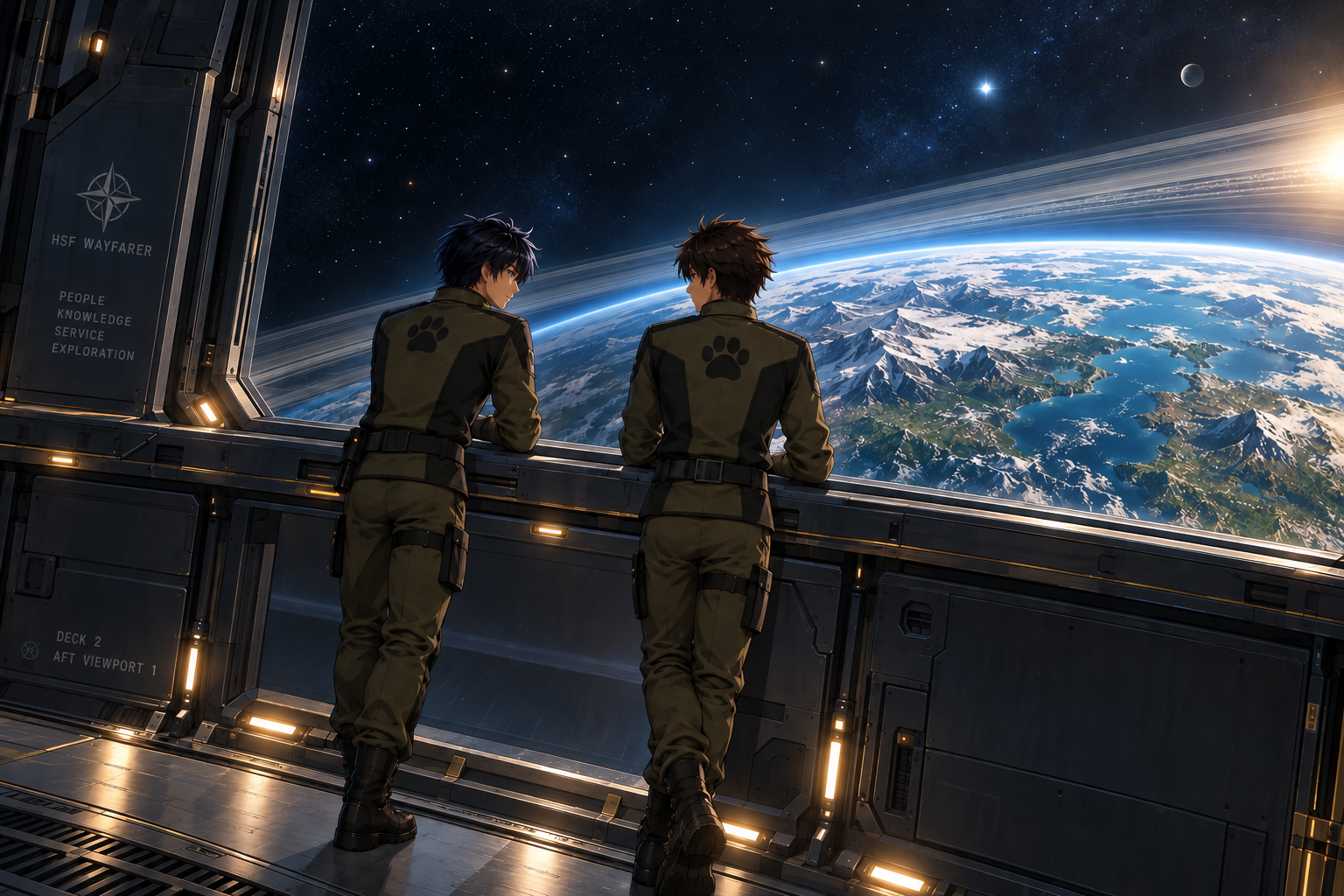
Seb stood alone, lost in his own thoughts at a viewport looking out at the curve of Hundeerde below, the rings, and far in the distance, Vandra. While he had not technically broken any of the simulated mission parameters, the post simulation debrief had been lively to put it mildly. Klaus had actually said very little during the debrief, preferring to let the other pilots state clearly and plainly exactly how they felt about the high-speed, tight sling-shot manoeuvre they had all just experienced, and what they would have done differently if they had been in the lead.
Seb sensed the sideways approach of someone else coming to join him, sliding in like a Rook.
Raven: Hey.
Seb: Hey.
Raven: That was quite a sim.
Seb: That was quite a debrief.
Raven: Was I too hard on you?
There were a few moments of silence before Seb answered again.
Seb: Nope.
Raven: Flying for real — around Vandra, in space. It’s gonna be pretty amazing.
The 06:00 bell sounded throughout the halls and dormitories of the Academy. In the C-Wing dormitory ten warm mounds stirred beneath the grey blankets. A now familiar voice sounded from the end of the dormitory.
Krieger: C-Wing! Eyes open!
You have exactly 30 minutes to have yourselves and this dormitory ready for inspection. No one goes to breakfast until I am satisfied!
The second day had begun. Legs, feet, and paws swung out to meet the cool tiled floor.
Timo: Ugh. What time is it?
Toby: Half-past sparrows fart!
06:04
Now mostly awake, and with their collective consciousness at least at periscope depth, the cadets of C-Wing made their way to the ablutions, for a quick toilet stop and splash of cold water on their faces.
Scott: Time check?
Lewis: 06:11.
Scott: Let’s move it guys, nineteen minutes left.
06:12
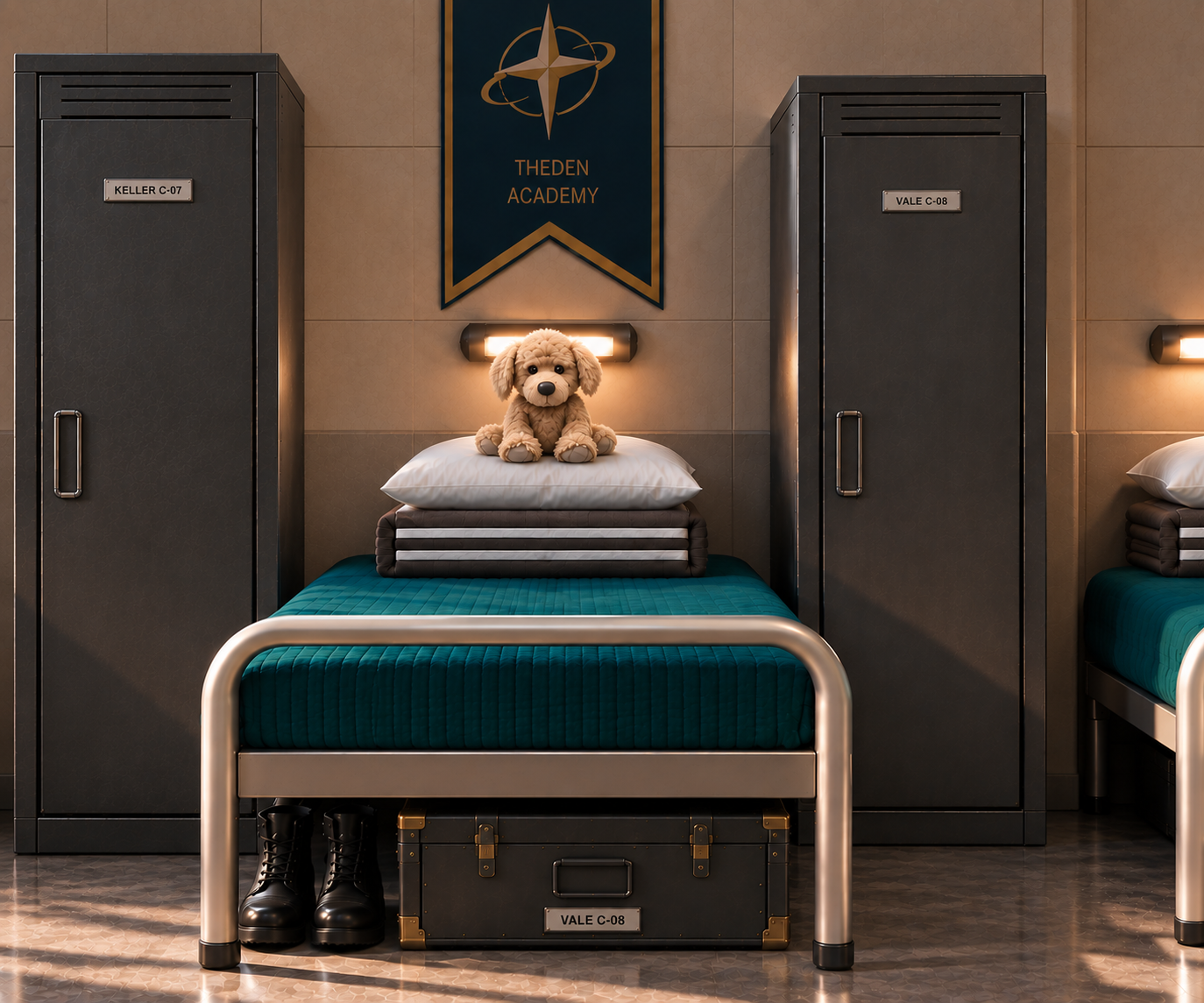
Uniforms and boots. Then, the bedrolls. The teal green blankets on the mattresses were smoothed out wrinkle-free and all the corners mitred — at exactly 45 degrees — mostly. Next came the grey blankets and sheets, folded and alternately layered, the last blanket wrapping right around the layered stack to form a tight block. Lastly, the pillow, the final capstone of the entire construction, was placed on top, the open end facing away from the door.
06:27
One final frantic check around the room, ensuring everything was in its place and as it should be. They could only hope.
06:30
Raven: ROOM!
The cadets of C-Wing swiftly came to attention, standing at the end and to the right of their beds, with their eyes front.
Flight Sergeant Wilhelm “Hammer” Krieger marched crisply into the dormitory and stopped directly next to Raven in bed C-01.
Krieger: Cadet Cole! Is C-Wing ready for inspection?
Raven straightened himself ever so slightly, ensuring his eyes stayed directly ahead.
Raven: Yes, Flight Sergeant!
Krieger nodded imperceptibly.
Krieger: Very well.
He then made his way down the dormitory, stopping briefly at each bed to appraise both the bedroll and the cadet’s uniform. When he got to Seb, he paused just a little longer.
Krieger: Cadet Jarvis! Your collar is not fully zipped! Fix it and give me twenty!
Seb: Yes, Flight Sergeant!
Seb raised his collar zipper by two teeth and then started his push-ups. Krieger continued down the first side finding one or two more minor issues with uniforms or finding a wayward wrinkle or incorrect mitre on the teal blanket. More push-ups. Coming to the end of the left-side row, he turned and started back up the right side of the dormitory. He was in no hurry and paused with proper intent, appraising both cadet and bed.
He then came to bed VALE C-08. Again, Krieger paused, appraising both cadet and bed. The bed was immaculate. The corners of the teal blanket were perfectly mitred. There was not one wrinkle to be seen. The bedroll was tight and straight, the strata of the inner blankets and sheets perfectly straight. Except — one thing about the bedroll was most certainly — not regulation.
Krieger: Cadet Vale!
Lewis: Yes, Flight Sergeant.
Krieger: You are our fifteen-year-old prodigy.
Lewis shifted his weight very slightly, and wiggled his toes in his boots. Keeping his eyes dead straight ahead, he answered quietly but clearly.
Lewis: Yes, Flight Sergeant.
Krieger: We shall see.
His eyes drifted back to the perfectly made bedroll.
What is his name?
Lewis: Dogger, Flight Sergeant.
Krieger paused ever so slightly before speaking again. His eyes flicked back to Dogger on the pillow. He knew exactly who these Human boys were — he’d read their files, and had been personally briefed by Huxley.
Krieger: He stays in the dormitory.
Lewis: Yes, Flight Sergeant.
06:37
Finally, Krieger came to the last two bed spaces, JÄGER C-09 and HALL C-10.
Timo was standing stiffly at attention, his whiskers trembling nervously.
Krieger: Cadet Jäger! Standing at attention does not mean you pass out! Relax your shoulders and breathe!
Timo forced himself to relax his shoulders, but his legs still felt like loaded springs, primed to recoil at a moment’s notice.
Timo: Yes, Flight Sergeant.
06:43
Krieger: That bedroll looks a bit of a dag, Cadet Hall!
Toby’s general outlook on life, whether it was his school tie or making a bedroll, was that a suggestion of compliance should be sufficient. Generally, he was used to never being caught for anything, and had assumed he never would be. Not today. With one fluid movement, Krieger disembowelled the offending bedroll, trailing its contents down the bed.
Krieger: Fix it, Hall.
It is now 06:44, by my count — breakfast starts in one minute and will end exactly at 07:15.
No one in this wing goes to breakfast until I am satisfied.
Toby began to frantically remake his bedroll, feeling the pressure of not only making it to Krieger’s standards, but also of cutting into his wing’s breakfast time.
06:46
Krieger: 06:46, Hall.
I hope your wing won’t have to go out to drill on an empty stomach.
Tick Tock!
06:50
Finally, after three attempts, Toby was able to produce a bedroll that was up to Krieger’s standard.
Krieger: C-Wing! Form up, before your breakfast grows mould!
06:52
The cadets of C-Wing were soon marching down the corridor to the mess hall, more than ready to eat a slightly hurried breakfast.
Breakfast
Between hurried forkfuls of scrambled egg, the cadets were dissecting their first inspection.
Seb: Phew! Glad that one is over. I was sure I had zipped my collar up properly, but it did move, just a little — can’t have been more than two teeth.
Hans: Inspections are about attention to detail. Just like when we do the daily inspections on our gliders before flying, missing one small defect could literally be fatal.
Seb: You’re right, Hans. Small details do matter.
Raven looked directly at Toby and grinned.
Raven: Hey, Tick Tock! Pass a serviette, would ya?
Toby just grinned back sheepishly and passed Raven the serviette without comment.
Following breakfast came daily duties. Each wing was allocated the same duty for a week. Kitchen dishwasher duty, toilets and showers ablution block duty, and grounds: especially important this time of year keeping all the paths outside the main entrance swept clear of leaves. The allocated duty would rotate each week between the three cadet wings. C-Wing drew ablutions for their first week, and they soon learned the most efficient ways to get it all done — toilets, sinks, and showers — all inside the allocated thirty minutes.
Gymnasium
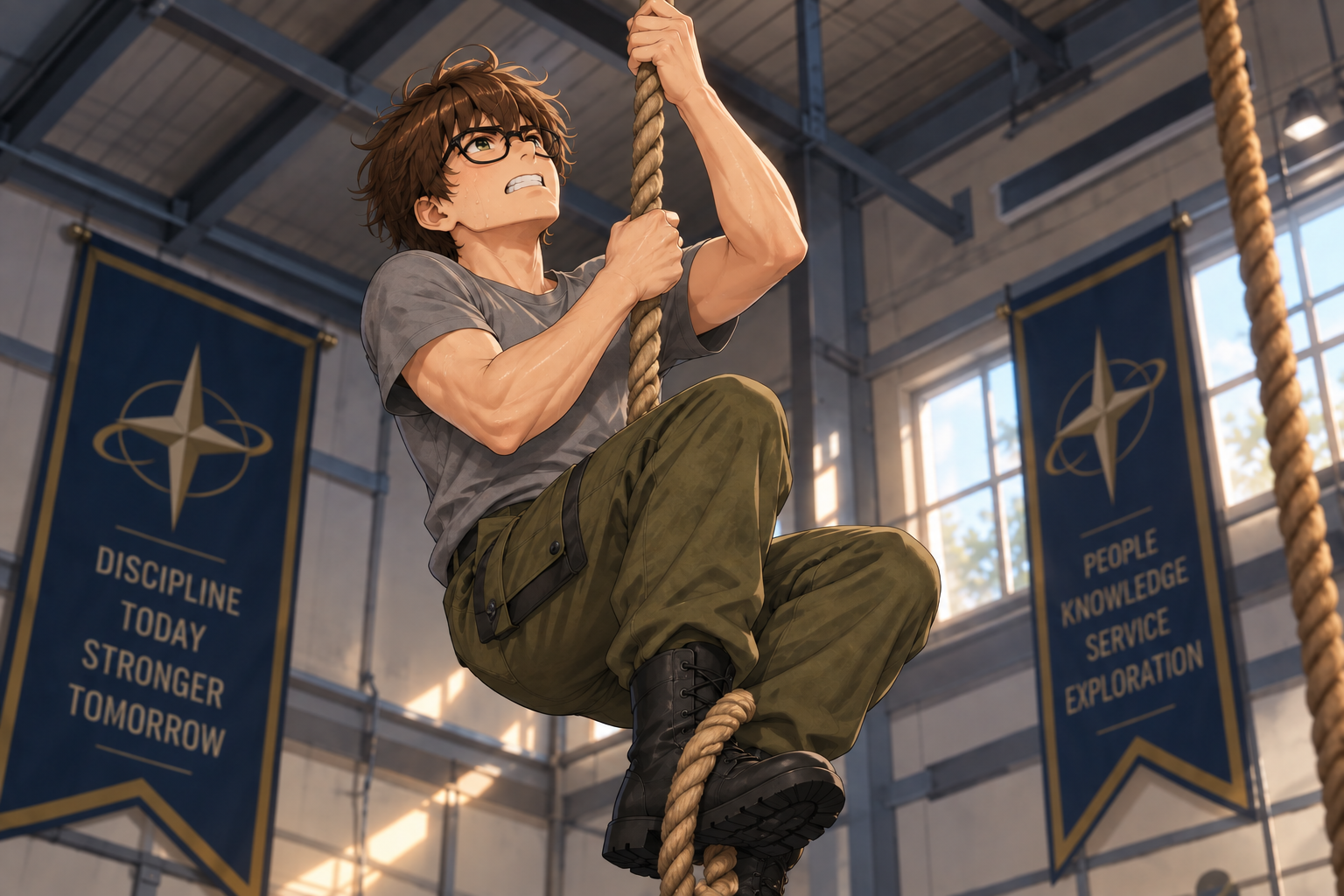
The cadets were all assembled in the gymnasium for their first fitness test dressed in just their fatigue pants, boots and regulation grey T-shirt. Krieger explained that before the end of the twelve-week basic training phase, they would all need to pass a required fitness level test to progress to flight training.
Run 2.4 km in 10:16 for a standard pass or 9:47 for a first-class pass
Complete 28 push-ups (standard) or 30 (first-class)
Rope climb, up touch top and back down in 30 seconds or 25 seconds (first-class)
For the second time today, Lewis felt genuinely anxious. He was used to achieving top marks academically — but here, in the gymnasium, he knew his intellect alone wouldn’t get him to the top of the rope. He was acutely aware that his slightly skinny fifteen-year-old arms and legs would need to do the lion’s share of the work. Yet, he was determined to do his best.
Krieger first demonstrated the correct technique himself.
Krieger: Wrap the rope round one foot, and lock it under the other — like this.
Then push up with your legs and slide your paws up the rope, and repeat.
Lock, thrust, slide. Lock, thrust, slide.
He climbed the last three metres of the five metre rope, and touched the top in the time he took to say it, dropping back down just as fast. He turned and looked directly at Toby.
Krieger: Cadet Hall! Let’s see if your climbing is any better than your bedroll making.
Toby’s sturdy frame and the raw muscular power from his hindquarters were evident from the moment his boots left the mat. He wrapped the rope around one foot, locking it with the other, exactly as Krieger had shown — he made one clean pull-up, with no wasted motion — and from there he didn’t so much climb the rope as launch himself up it, each reach and foot lock coming in single explosive bursts. He touched the top of the rope before Krieger had fully turned to watch the clock, and dropped back down just as fast, landing light on his feet, ears up, and his tail giving one satisfied flick.
Krieger: It would seem so. Good work, Hall.
And so it went, each cadet attempting the rope climb, some more successfully than others. The closer it got to Lewis’ turn, the more his legs started to feel like jelly.
Krieger: Cadet Vale!
This was it. Lewis, determined to do his best, pushed his glasses up his nose and approached the rope. His hands felt sweaty and he subconsciously wiped them on his pants. He gripped the rope, pulling himself up enough so that he could lock the rope properly with his boots. He pushed up with his legs, but on his first attempt, his boots slipped to the mat below. He tried again, this time he managed to push himself up, his hands now at the level of his chest. Not daring to loosen his grip too much, he moved one hand up higher, and then tried to bring the other up. He slipped again, falling back to the mats below. Lewis sat for a moment with his arms wrapped around his knees.
Krieger: That’ll do, Vale. We have the next twelve weeks to get you to the top.
A hand stretched out to pull him up. It belonged to Scott.
Scott: I didn’t make it to the top either — don’t worry, we’ll make it together.
Lewis sniffed.
Lewis: I couldn’t even make one clean pull. I suck.
Scott: No, you don’t. We just need a few more of Krieger’s push-ups. We’ll get there.
The next few weeks slipped by much faster than the cadets realised. While the predictable routines and the daily grind of inspections, drill, and completing multiple sets of tasks within arbitrary 30-minute windows continued exactly the same, something almost imperceptible was happening. With every set of push-ups meted out by Krieger’s unrelenting discipline, every step marched, every bedroll made — all of it accomplished something. Their overall fitness and stamina grew, and their attention to even the smallest details became highly attuned.
For Lewis this held true, especially with his level of physical fitness. He conquered the run in the required time, and push-ups — as it was for all the cadets by now — had become almost second nature. However, one nemesis remained.
The rope.
He had now mastered the foot lock and arm pull technique, but by week six, one thing still hadn’t changed.
Lewis: I’m the only one left who can’t get to the top.
Scott: You’re getting better — that was two-thirds the way up that time.
Lewis: Two-thirds is not the top.
Scott: No, it isn’t, but you’ve improved loads.
You’ll get there, Lewis — you can do it, you just haven’t got there yet.
Week Six — Weekend Pass
Friday, 16:00
A long-anticipated highlight for every one of Blue Flight’s thirty cadets was the first weekend pass after six weeks of relentless training, discipline, and drill. Liberty to come and go as they pleased, provided they were back within the grounds each night by curfew at 22:00. From 16:00 Friday, until 16:00 on Sunday, there would be no drill, no uniforms, no inspections, and no one shouting at them. It was a welcome opportunity to get out of their green skins for a while. Theden, and all it had to offer, was theirs — however they chose to spend it.
Lewis and Scott knew exactly where they wanted to go, the Theden observatory. For Seb, Raven, Timo, Hans and Toby their sights were somewhat higher — Theden Airport, specifically the Theden Soaring Centre and a chance to get in a glider again, a complete escape from the terrestrial demands of Academy basic training.
Krieger was at the door checking them out. The cadets were all out of their uniforms, but Krieger — a hunde who quietly preferred to keep his boots firmly on the ground — immediately noticed one thing: a stream of blue flight jackets.
Krieger: So you really are going to go and fly those things — without engines.
Timo: Yes, Flight! We sure are!
Seb: We could take you up if you want, Flight!
Krieger stiffened and snuffled slightly.
Krieger: Negative, Cadet. I earned this rank shouting at cadets on flight aprons, not leaving them.
Once they were well out of earshot Timo nudged Seb—
Timo: You don’t reckon The Hammer is…
Seb: Could be.
Timo gave a low whistle as the irony settled on him.
Week Eleven — Gymnasium
It was the penultimate week of the twelve-week basic training phase. The cadets, each in their own way, had all now found their natural rhythms and made the transformation fully from raw civilian to competent cadet. Almost. The final required fitness test was underway: first the run, then after a short rest, the push-ups, and finally, the rope climb.
Lewis. One rope. One top. One touch.
Over the last few weeks, he had been practicing with Scott, with any spare chance they had. He’d managed to get to the top once or twice, but he was still taking much longer than the 30 seconds allowed. All the push-ups over the last few weeks had certainly helped to increase his upper body strength, but the true power to complete the climb came from his legs, now honed from weeks of marching.
It was Lewis’ turn to do the rope climb next. Flight Sergeant Krieger stood at the bottom of the rope with his stopwatch and tablet to record the times.
Krieger: Cadet Vale!
This was it. Wiping his hands on his pants one last time, he stepped up to the rope ready to climb.
Krieger: Climb!
Lewis gripped the rope firmly, and made the first pull up to enable him to wrap the rope around his boot and lock it with the other. He then let his legs do their work, pushing his body up the rope.
Krieger: Keep it up! Power from the legs, cadet!
The rest of the cadets joined in, yelling their support, encouraging and willing him on, the collective noise in the gymnasium swelling to a crescendo with every pull, and every thrust of his legs.
Lewis closed his eyes with concentrated determination.
Thrust, slide, lock. Thrust, slide, lock.
Krieger: Twenty seconds!
No time for hesitation, just the rhythm, over and over, each repetition carrying him higher.
Then — the touch of metal at the top. Descent and his boots touching the mat.
The gymnasium fell completely silent, waiting for Krieger to announce the time, the only sound was Lewis’ laboured breathing as he bent over double, hands on his knees.
Krieger: Twenty-nine seconds!
Good work, Vale.
Week Twelve — 16:00 Friday
Krieger: Blue Flight! You have earned your weekend pass.
Dismissed!
The thirty cadets of Blue Flight turned to the right and fell out of the final parade of their basic training, cheering as they did so.
The specialist orbital training phase, for both pilots and analysts, would commence Monday.
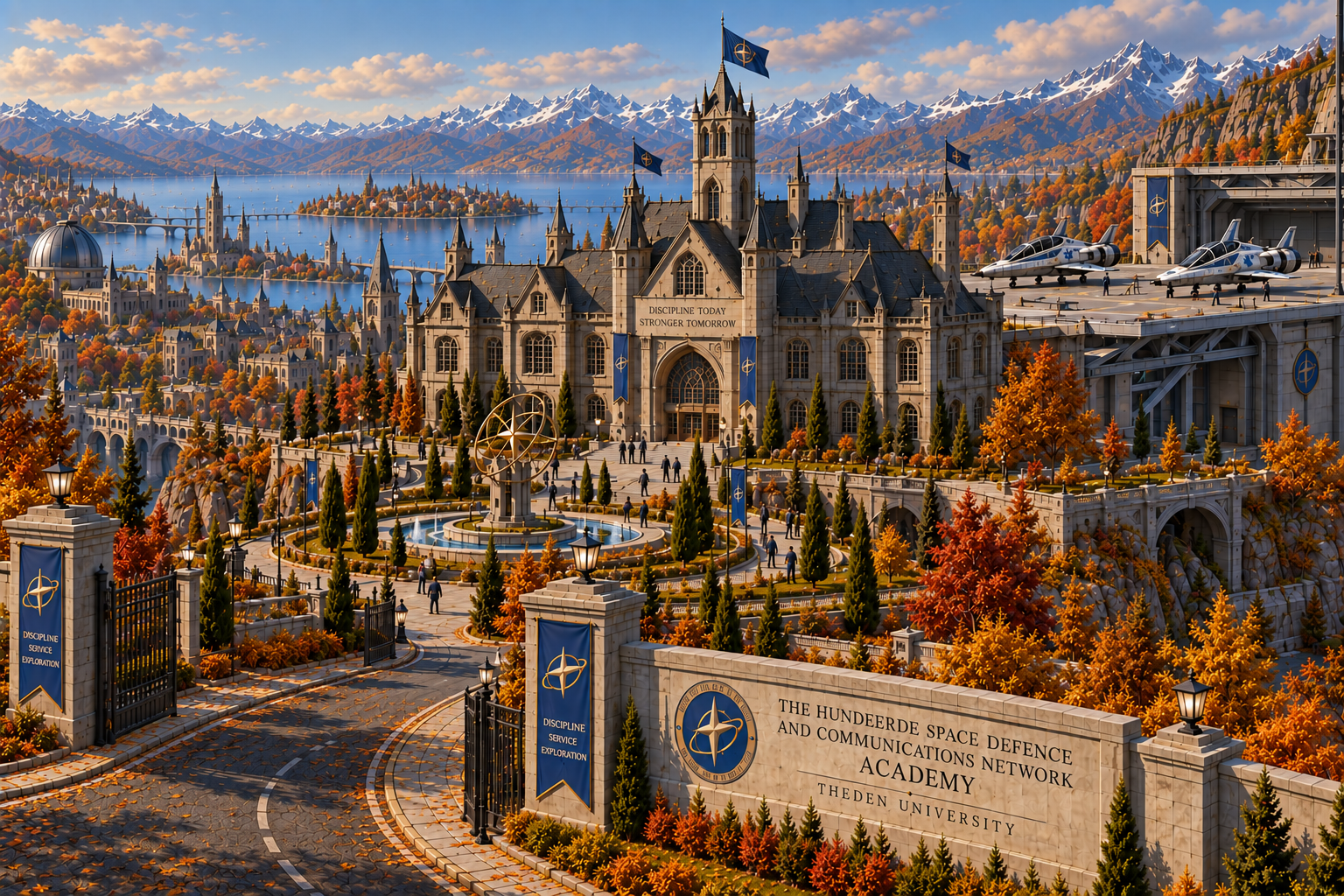
The Hundeerde Space Defence and Communications Network Academy: Theden University
At 07:50 the Hundeerwagon containing Seb, Raven, Lewis, Scott, Timo, Hans and Toby entered through the wrought iron gates of the Hundeerde Space Defence and Communications Network Academy at Theden University. The Hundeerwagon pulled up smoothly at the drop-off zone, situated next to the finely manicured gardens. A circular garden and fountain sat within the grounds, home to an armillary sphere sculpture made of brass rings, with the golden academy star at its centre.
As the last weeks of summer drew to a close, thoughts at Headwall turned to both the new school year ahead for those of the younger boys staying at Headwall and also to those who would shortly leave. Some would be going to Theden University, and Seb and Raven would also be heading to Theden, to take their places at the Hundeerde Space Defence and Communications Network Academy as cadets.
Patrick and George were in the living room poring over their elective choices for their last year at high school.
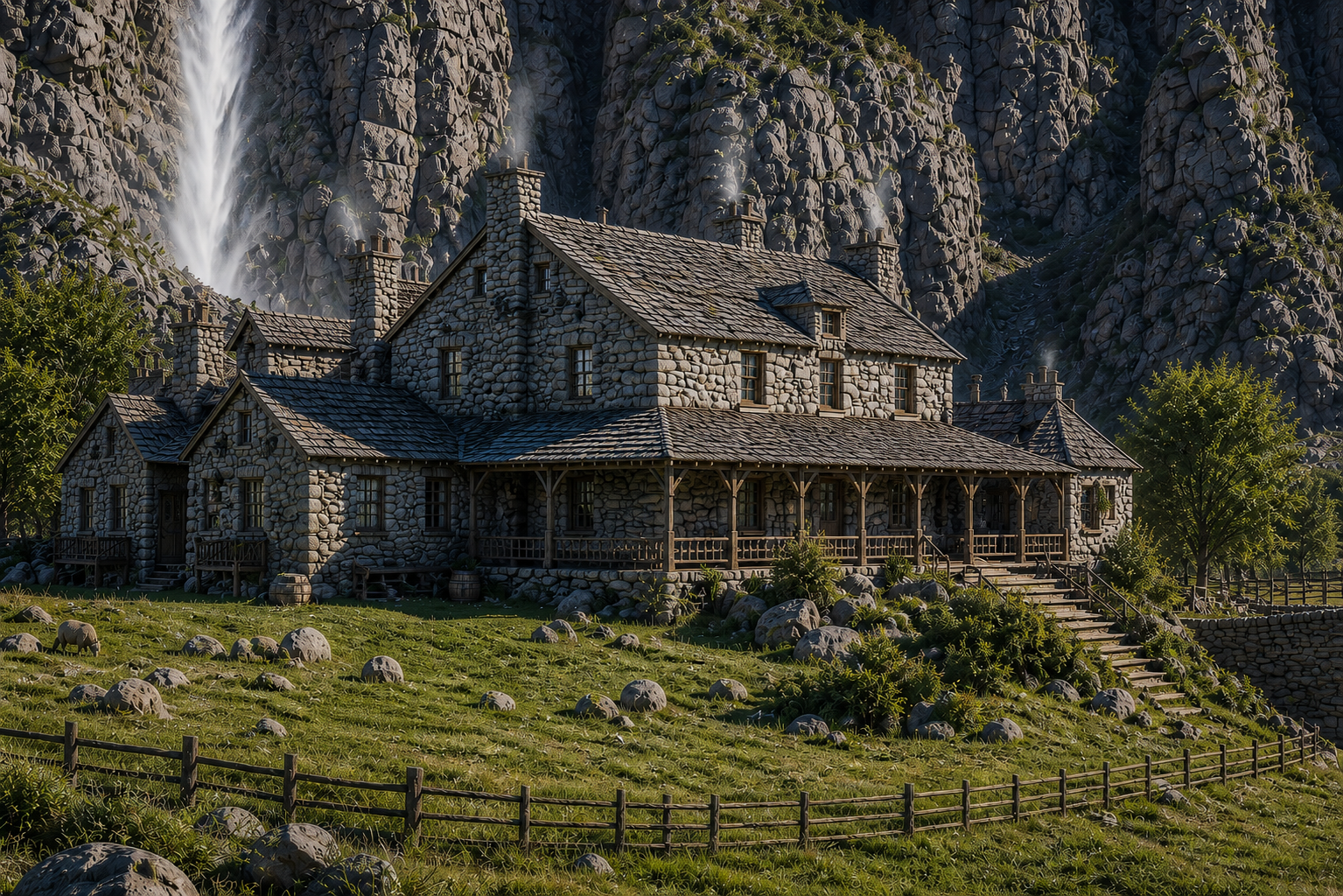
The Graufels massif, the highest mountain on Hundeerde, rose sheer and vast from the floor of Graufelstal Valley, its peak and side ridges trailing off into a jagged chain of lesser alpine peaks that made them seem like foothills in comparison. The boys had seen Graufels before from the air, which only became visible after crossing the headwall saddle.
Graduation Ceremony — Veldmeer High Gymnasium: Spring, Year 5
The whole school had assembled in the gymnasium which had been reset with rows of chairs and a stage set up at one end. In addition the families of the graduating students were also present. Principal Brandt was in full flight giving his end of year address.
Another summer had come and gone, and the final year of high school for the boys in the upper class had begun. Along with the beginning of autumn, came Seb’s 18th birthday, another significant milestone, five years had now passed since a thirteen-year-old boy walked down the ramp of the Chasetail. For Seb, each year had presented its own unique challenges and triumphs, learning to fly a glider and going solo, his notebook, containing drawings of things that he could not express with words, unresolved grief that still surfaced at unexpected moments and new friendships forged with old ones strengthened.
However, the biggest challenge of his life so far still lay before him. Asking a girl to the high school formal.
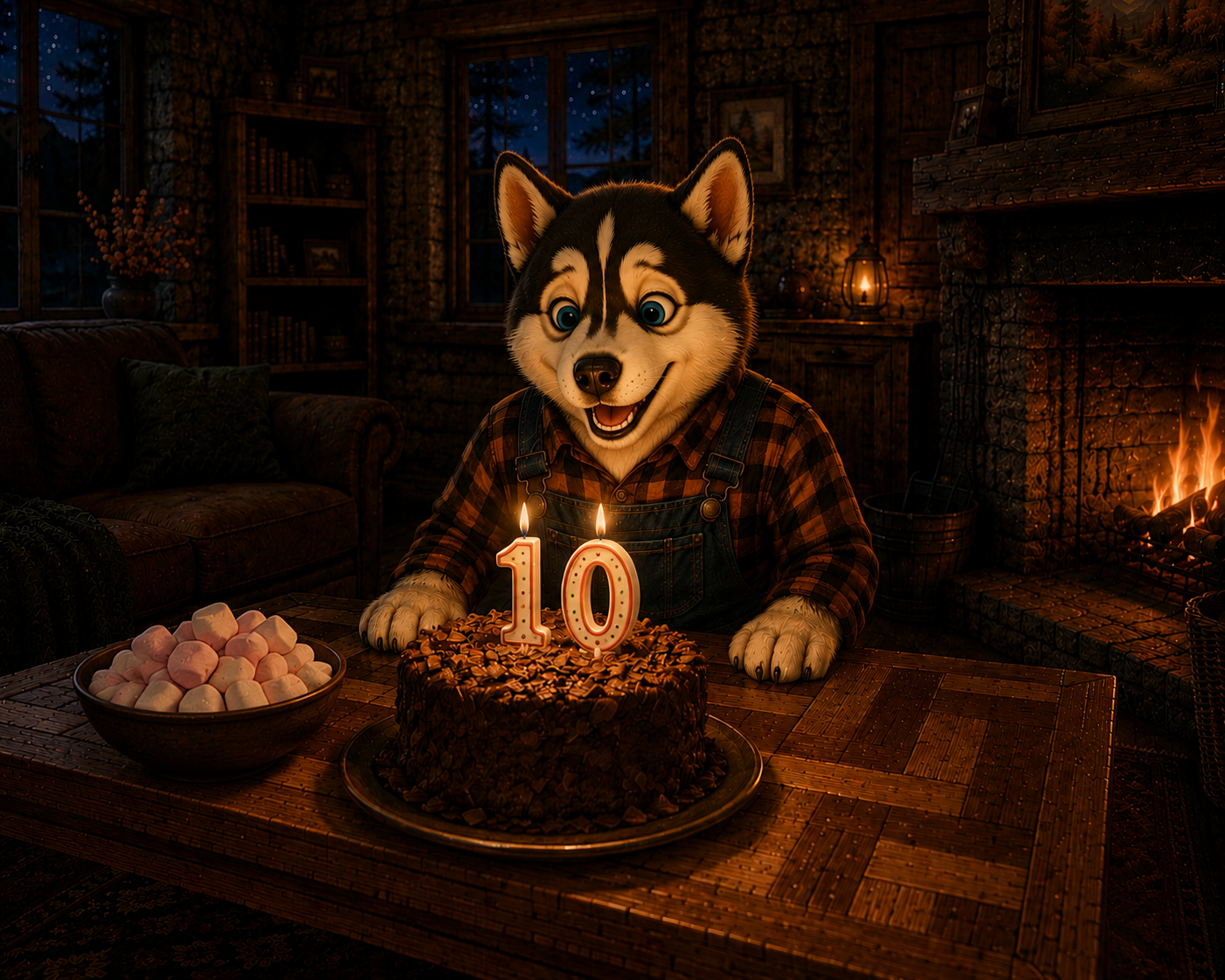
Angus was about to turn ten, a significant milestone, moving from single to double digits. The cake, as usual was baked by Charlie, chocolate, moist, with rich dark chocolate icing — right down the sides, and covered in chocolate shavings. On top, two candles: a number one, and a zero, befitting a birthday of special magnificence. The twin flames of light signifying him becoming another year older. In addition, a huge bowl of pink and white marshmallows, and along with chocolate, one of Angus’ firm favourites. Angus, for once, was firmly the well-deserved centre of attention in a full house warm with celebration.
Just before eight o’clock, Grandpa Jake slipped into his den expecting his familiar call from his friend Marvin Huxley. It was not long before he returned to the party and came over to Lewis with a look of cryptic intrigue.
During breakfast on Seb’s sixteenth birthday Grandma Bella slipped a small wrapped package next to Seb’s plate of scrambled eggs. It contained a full set of graphite sketching pencils. Seb was pleased, as his 6B in particular had become almost a stump.