
The Mammothants were on the move. The harsh winter conditions of the Cyanos Northern Tundra had driven the herd southwards in search of fresh food.
Food. Their one constant need — shared by all in the herd, except for the little ones who still relied on their mothers for milk. The herd held a mixture of adult females and juveniles. The males, once they reached maturity, had left and formed their own bachelor groups, returning only during the mating season.
Crossing the last exposed reaches of the northern plains, the herd neared the foothills of the mountains. Here, in a crisscrossed maze of valleys, they would find fresh food, trees with bark to strip, and plentiful grasses buried beneath the snow. Most of the valleys also held wide braided rivers that flowed down from the high mountain glaciers.
There was water to drink, food to eat, and shelter from the harshest of the northern winter winds.
The herd was led by the Matriarch, and she was wary. She knew that the further south they went, the closer they would come to the people. People could be dangerous and unpredictable. They were not to be trusted. At the beginning of the valleys, the people would still be far and few between, but the further south they travelled, the more often they would come across them.
But still — hunger was their driving need, and food was what would fulfil that need. Where there were people there was food, but it did not come without risk. The people had strange ways — they moved about on hard-formed tracks in strange noisy beasts that somehow they had tamed to their will. Sometimes those noisy beasts would be loaded, loaded with… food, glorious food.
Hunger drove the Matriarch and her herd onward — southwards, ever southwards.
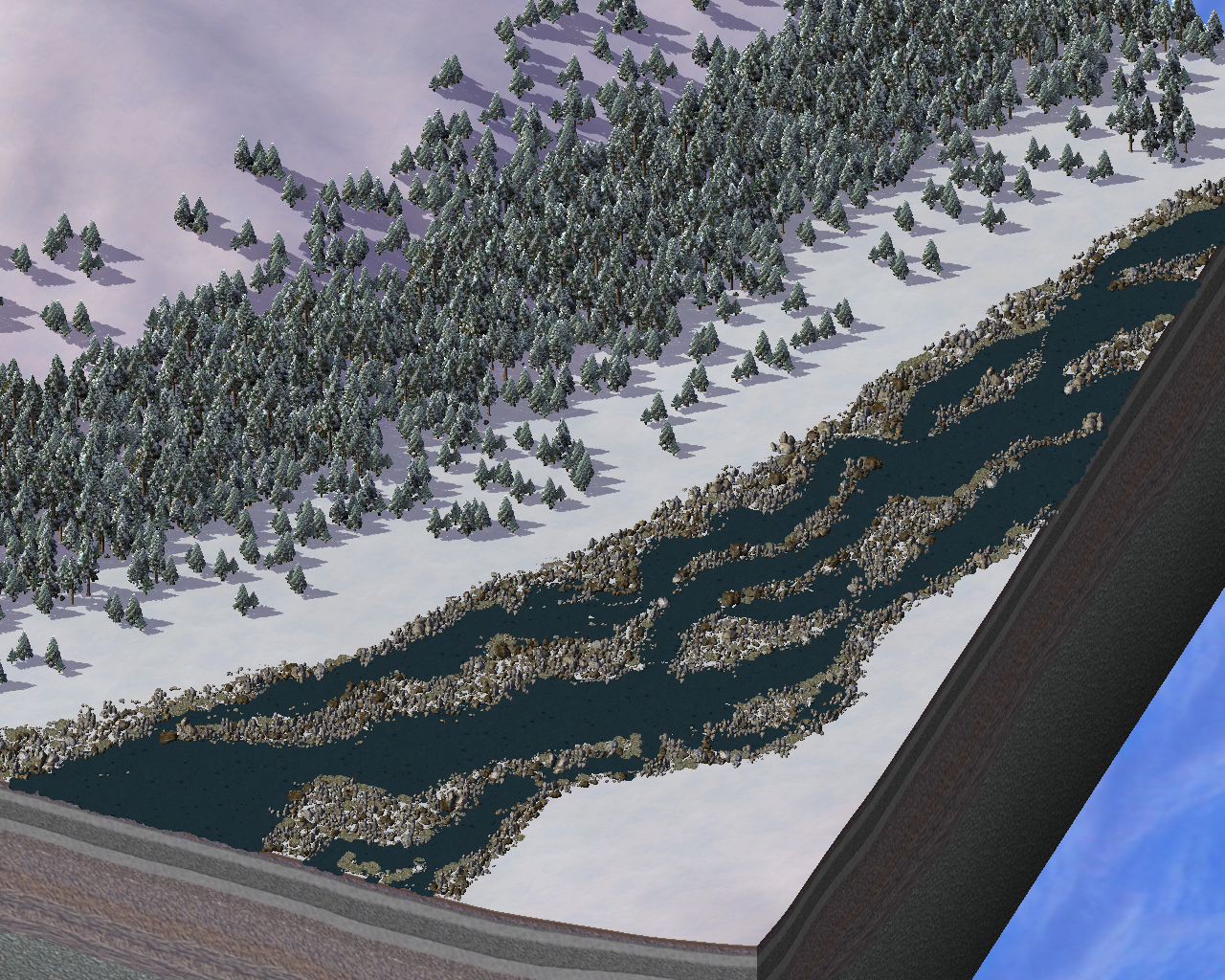
The herd entered a valley bordered on both sides by steep mountain ridges that rose sharply from the flat valley floor.
The valley contained a mixture of trees that had lost their summer leaves and evergreens.
In the more sheltered areas, open patches of ground still held plentiful grasses that could easily be uncovered with tusks or trunks from the drifting snow.
For a week or two, the herd slowly made their way up the valley, following the river and feeding as they went.

As they neared the head of the valley, the Matriarch had to decide — turn back and head down the valley again, recovering the ground they had already foraged, or carry on up and over the pass that would lead them into the next valley with fresh food.
They headed on up. Closer. Closer to the people.
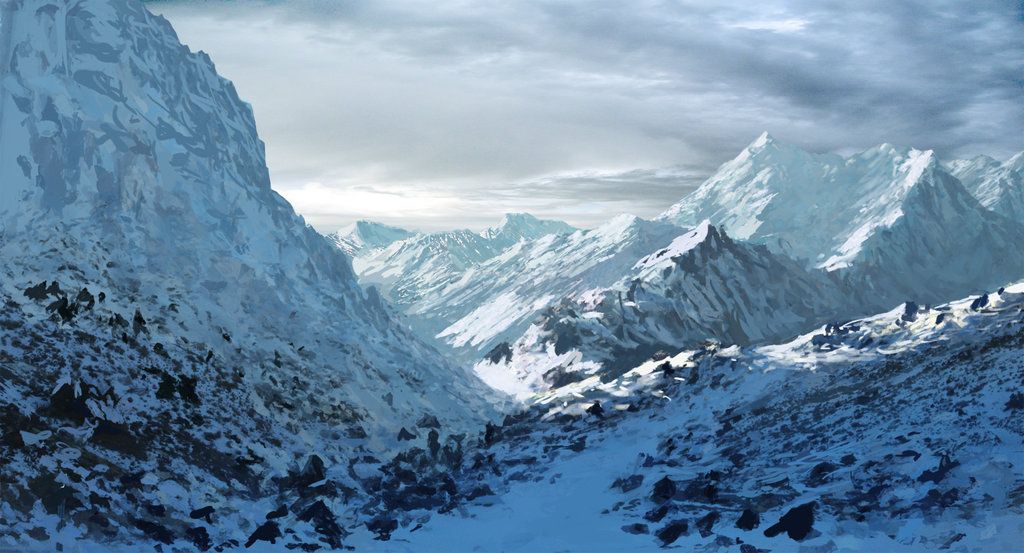
The herd of mammothants approached the pass that would lead them down into the next valley. They made their way in single file, careful to avoid the sharp volcanic rocks that protruded from the snow. The Matriarch, however, knew the pass and guided her charges deftly through, keeping the little ones in the middle for greater protection. They crested the highest point and started to descend into the valley below.
The valley far below them lay carpeted with evergreens, cloaked in a dusting of snow from the last fall. The promise of plentiful food, streams to drink from, and shelter from the nor’ lazy wind that somehow would rather blow through you than go around.
The Matriarch paused and sniffed the air. Carried on the breeze was the smell of smoke. Not the dangerous sort of a forest fire, but more a wafting wisp, most likely from one of the tree caves that the people liked to live in. She knew they must be getting closer, and she must be wary — however the needs of her family were greater. They must press on. Closer, always closer to the people.
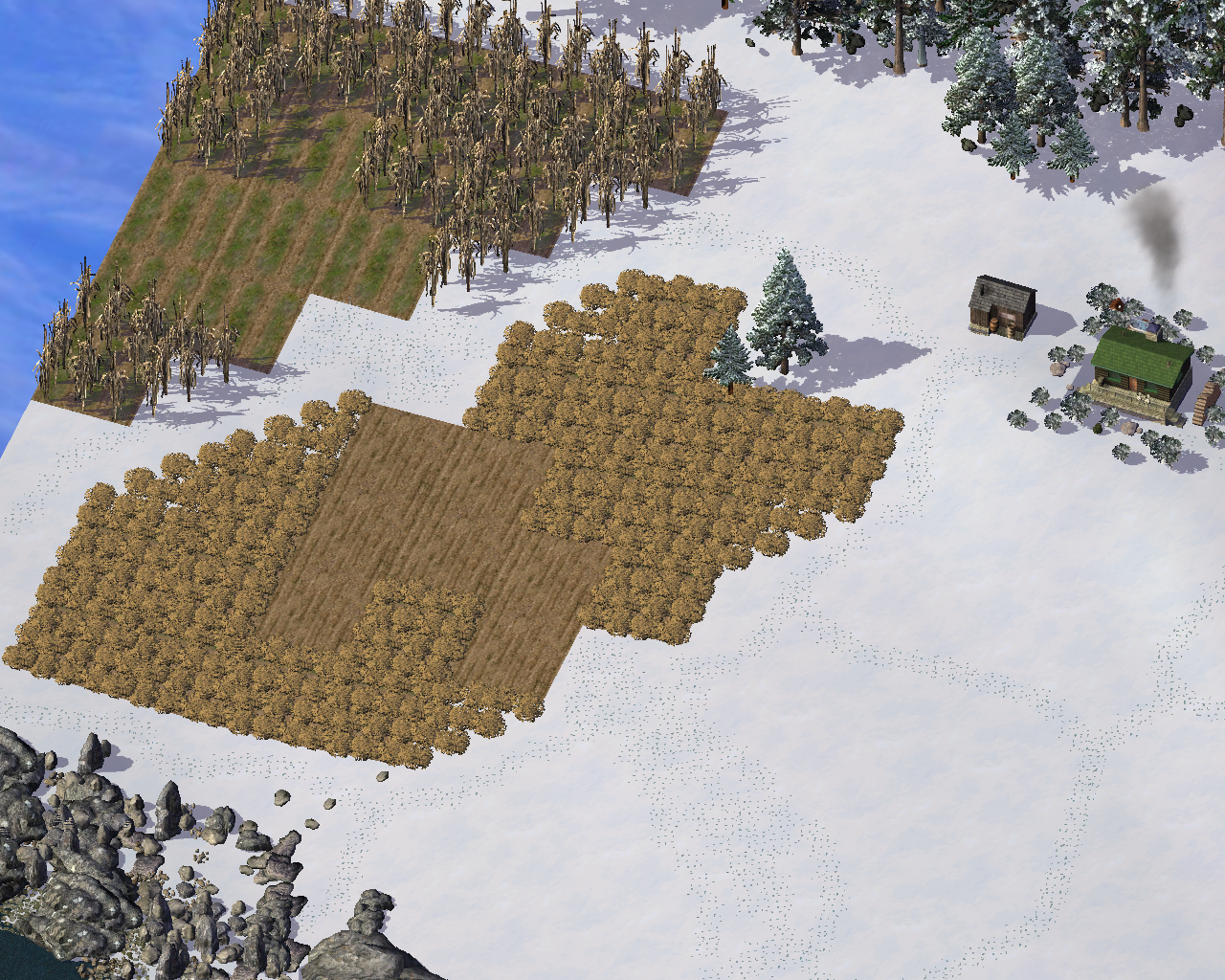
As the herd crested another ridge, they saw the source of the wood smoke coming from two small tree caves. More importantly, however, they saw plantings of food — patches of maize and grain neatly laid out, as if a buffet had been prepared for them.

The herd moved hungrily into the food plantings and began tearing out great chunks with their trunks, eagerly filling their stomachs with all that was on offer.
The commotion of a whole herd of mammothants tearing, ripping, and eating aroused the attention of the people who had been enjoying a soak in the hot spring.
They were soon running down the hill, furiously waving their towels above their heads and shouting loudly in their strange language.
However, as they got nearer to the herd they slowed — as to who was more afraid of whom was, at this point, moot.
The message, whatever the language, was clear — the mammothants were not welcome.
The Matriarch, not willing to cause a major confrontation, could see a clear path of escape.
They would keep moving on down the river edge and away from these hairless, bare-bodied, noisy, shouty people waving their arms and towels at them.
On and on they went, further and further, following the river down the valley, which flowed peacefully at their side.
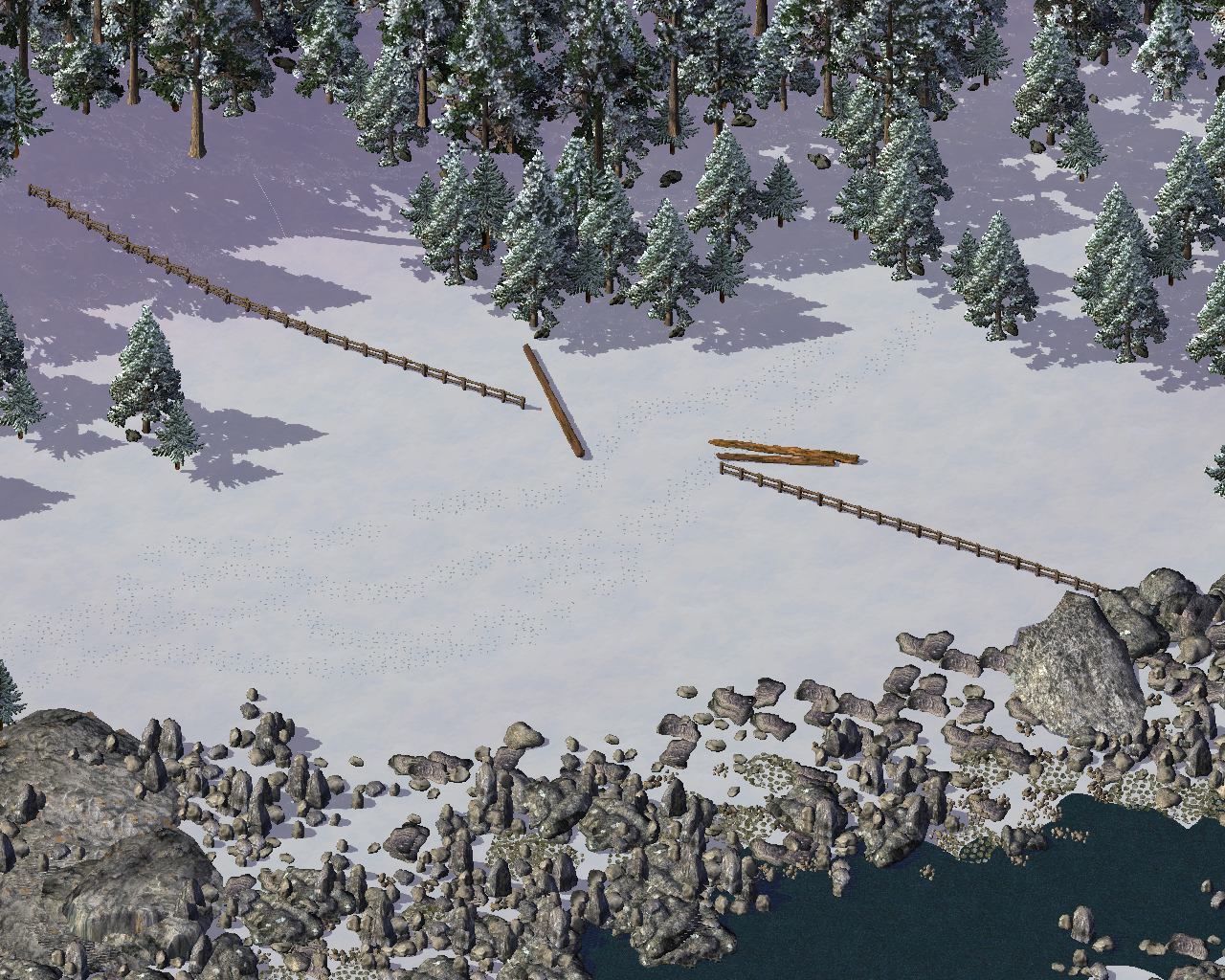
Presently, the herd came across what looked to them to be fallen trees barring their way. With little resistance they pushed their way through, forming a gap for the little ones to follow.
A little further on, they came across neatly laid out patches of vegetables — cabbages, cauliflowers, and onions — which soon found their way to their trunks and then into their hungry mouths.
If there were people about, they stayed in their tree caves, peeking out through the openings made in the walls.
Occasionally one of the people would come out, waving their arms and shouting — always shouting in that strange-sounding language, which the herd could not understand.
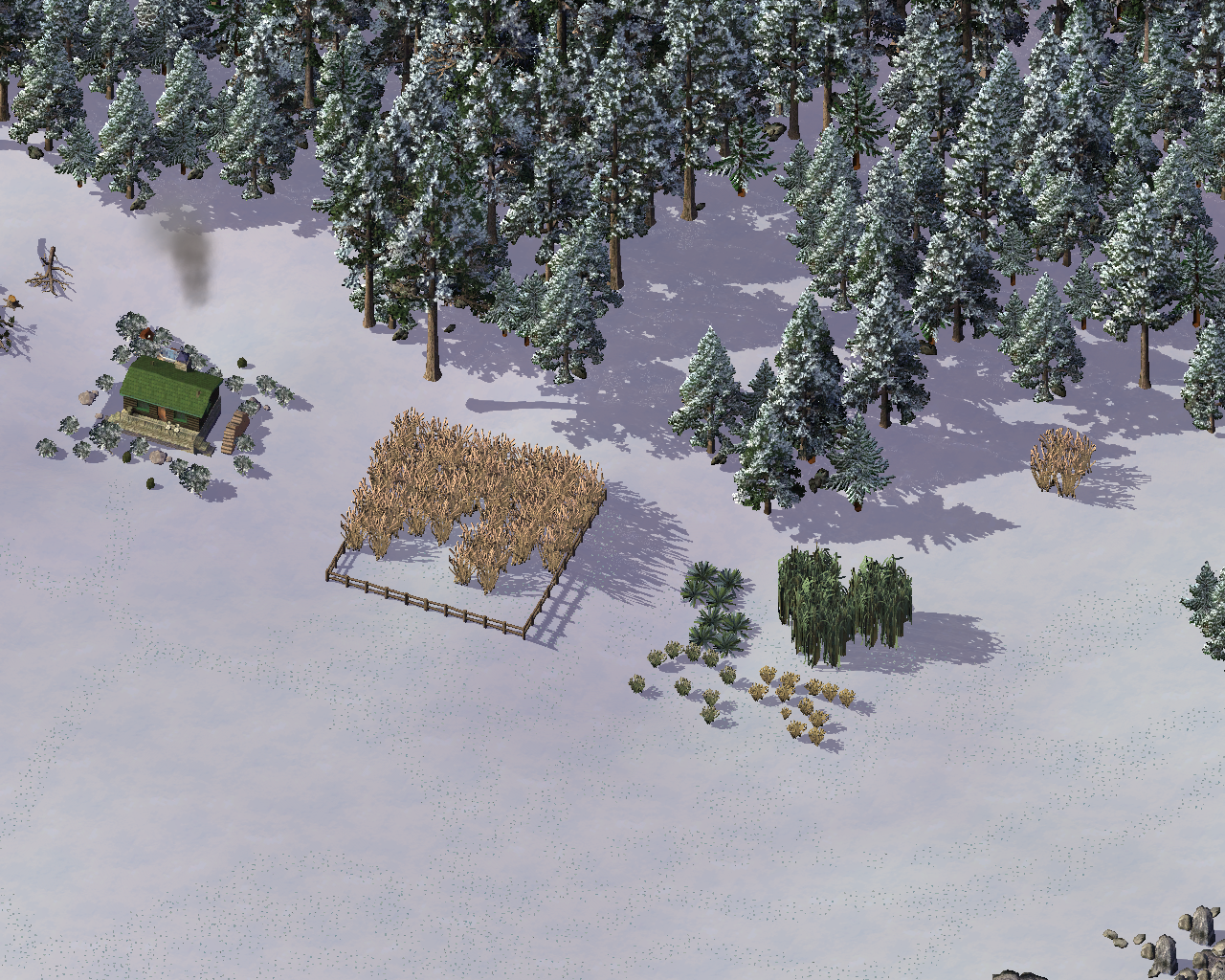
A new problem now presented itself to the herd. They had come across a small stream that looked as if it had been lined with tree branches, and this now barred their way.
The larger mammothants were able to step over and easily cross. However, the little ones were too small to do the same.
This was when they saw, a little further along, some fallen trees that bridged the stream. They could cross here.
The first little ones crossed with ease. However, the largest of them was just a bit too heavy, and the branches suddenly gave way beneath him and he fell into the stream.
The tree branches that lined the stream made it impossible for him to scramble out — he was stuck.
The little one raised his trunk in alarm and called to his mother for help.
The herd milled about, unsure of what to do.
They were able to reach out with their trunks and link with the little one, but they were unable to pull him up and out.
Worse still for the Matriarch and the herd, the commotion had caught the attention of the people.
Slowly they came in ones and twos, some riding in and on their noisy beasts, keeping their distance for now. But as time wore on, the crowd of people grew.
They communicated incomprehensibly amongst themselves, sometimes pointing to the little one and at other times waving their arms at each other as if this was simply the normal way they communicated.
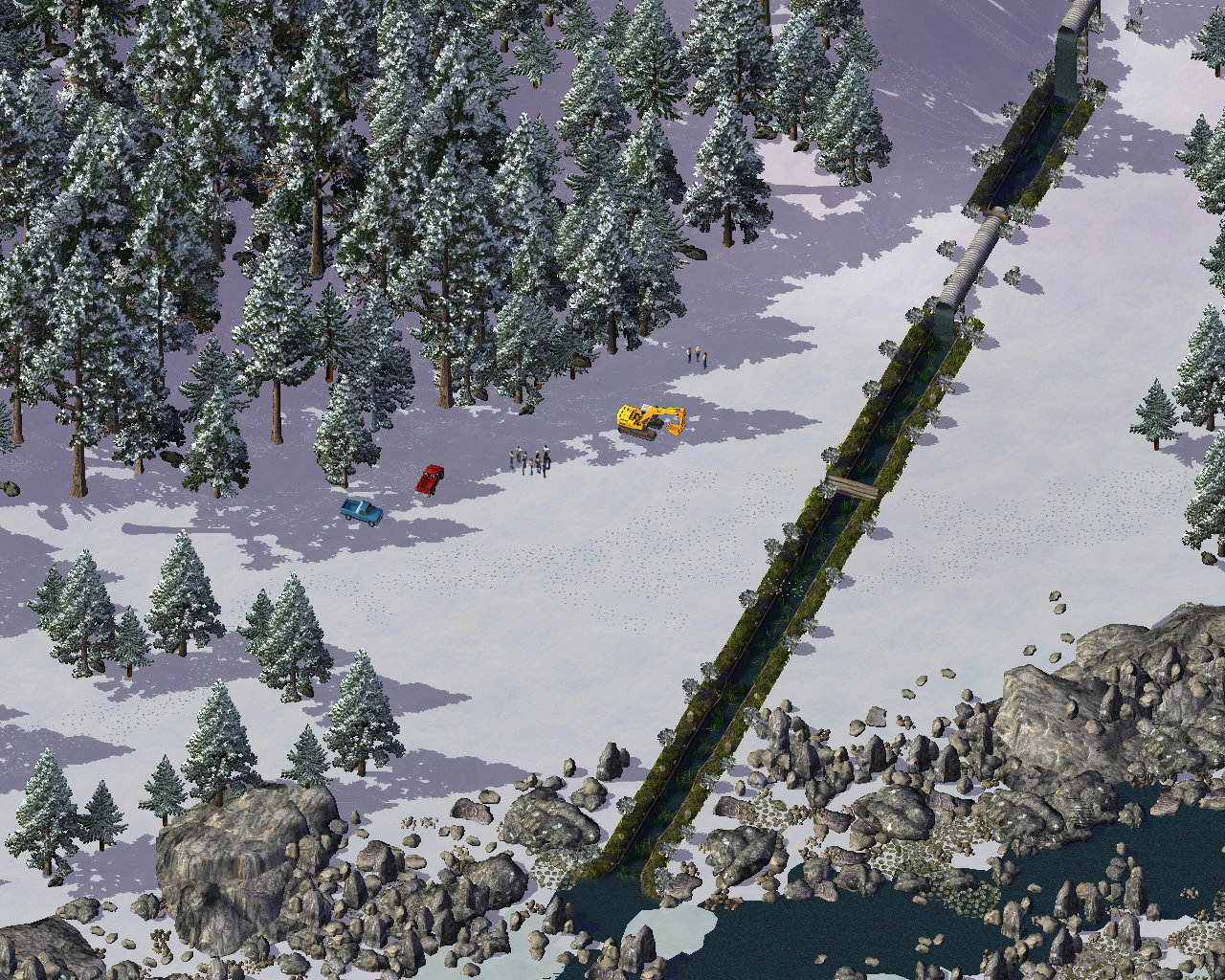
After what seemed a long time, a new sound rose above the background noise. It was a deep throbbing sound, different from that of the other noisy beasts. This new beast was almost as big as the adults in the herd. It roared and belched black smoke from its singular nostril. Riding inside was one of the people, and the beast seemed to be subject to his will.
Closer and closer the beast and person came, closer to the little one trapped in the stream and hemmed in fast by the timber sides.
The herd instinctively backed off. However, the little one’s mother and the Matriarch stayed as close as they dared.
Was this the end for the little one? Would this new monstrous beast devour the little one whole?
The beast had a long arm and a claw-like hand, and the anxious herd watched as the bestial arm reached out towards the little one.
He called out in fright. The herd felt helpless to save him.
The beast, however, did not attack the little one. Instead it plunged its arm deep into the earth of the stream bank and began scooping earth and timber away.
Slowly but surely, a slope began to form.
A few of the people again started waving their arms and calling out. This time they were not shouting. Now they sounded gentle and encouraging.
Slowly, the little one realised he could, with a bit of slipping, sliding, and muddy scrambling, clamber his way up onto the opposite bank.
The beast carefully backed away and fell silent.
The little one caught sight of his mother and ran as fast as he could to her side, their trunks touching and intertwining in relieved welcome.
The herd gazed on in wonder — the people had helped the little one. He had not been devoured by the great tamed beast; rather, the great beast had helped in the rescue.
The herd then turned to the people and raised their trunks, trumpeting a grateful salute.
Then at last they turned and continued on their way.
 Screw Pile Developments
I was thinking that this was going to be rather cliched, and it is, to an extent, but telling from the mammothant point of view does give it just enough of a unique twist to make it all worthwhile. A fun little vignette.